DeepSeek Harness vs OpenCode: Which Coding Agent Should You Use?

By Nathan Cole
MyClaw Editorial
MyClaw
Run Best-in-Class AI Agents Now
Run OpenClaw or Hermes Agent on managed MyClaw hosting, so your AI agent stays online, updated, and ready for real work.
AI Takeaway
- Which is better for most developers today? OpenCode. It has a more established daily workflow, broad model support, and terminal, desktop, and IDE options.
- Who should choose DeepSeek Harness? Developers who want to experiment with a deeply composable runtime where models, tools, sessions, policies, and even the agent loop can be replaced as plugins.
- Can both run DeepSeek models? Yes. OpenCode includes DeepSeek in a catalog of 75+ providers. DeepSeek Harness supports DeepSeek, catalog providers such as OpenAI and Anthropic, and custom endpoints.
- Which produces better code? There is not yet enough reliable head-to-head evidence for the official DeepSeek Harness. Test both with the same model, provider, task, and permissions.
- What is the shortest decision rule? Use OpenCode as a dependable daily driver; try DeepSeek Harness when deep runtime customization matters more than interface stability.
DeepSeek Harness vs OpenCode at a Glance
| Category | DeepSeek Harness | OpenCode |
|---|---|---|
| Current status | Developer preview with breaking changes expected | Established open-source coding agent |
| Main interfaces | Web UI and headless profile | Terminal UI, desktop app (beta), and IDE extension |
| Model choice | DeepSeek-first, plus catalog and custom providers | 75+ providers, DeepSeek, and local models |
| Extension model | Core runtime components are plugins | Plugins, hooks, custom tools, commands, and agents |
| Agent workflow | Persistent sessions, plans, delegation, jobs, and composable policies | Build and Plan agents plus specialized subagents |
| Best fit | Runtime builders and early adopters | Daily coding across existing projects |
| Main tradeoff | Rapid change and higher configuration complexity | Extensions focus on hooks and tools rather than replacing every core service |
As of August 17, 2026, OpenCode is the safer default for active development. DeepSeek Harness is the more ambitious experiment if you want to reshape the coding-agent runtime itself.
What DeepSeek Harness and OpenCode Actually Are
DeepSeek Harness: A Plugin-Composed Agent Runtime
This is the official open-source project from DeepSeek AI, not an older community wrapper with a similar name. It is in developer preview, with compatibility-breaking changes explicitly expected.
Its defining idea is that everything is a plugin. Cordis lets plugins contribute services, typed events, and reversible effects. Model adapters, tools, sessions, the agent loop, sandbox, approval policy, and UI are replaceable parts composed through profiles and bundles. A Web profile supplies the browser interface; a headless profile runs one fresh persisted session and returns its result.
OpenCode: An Established Multi-Provider Coding Agent
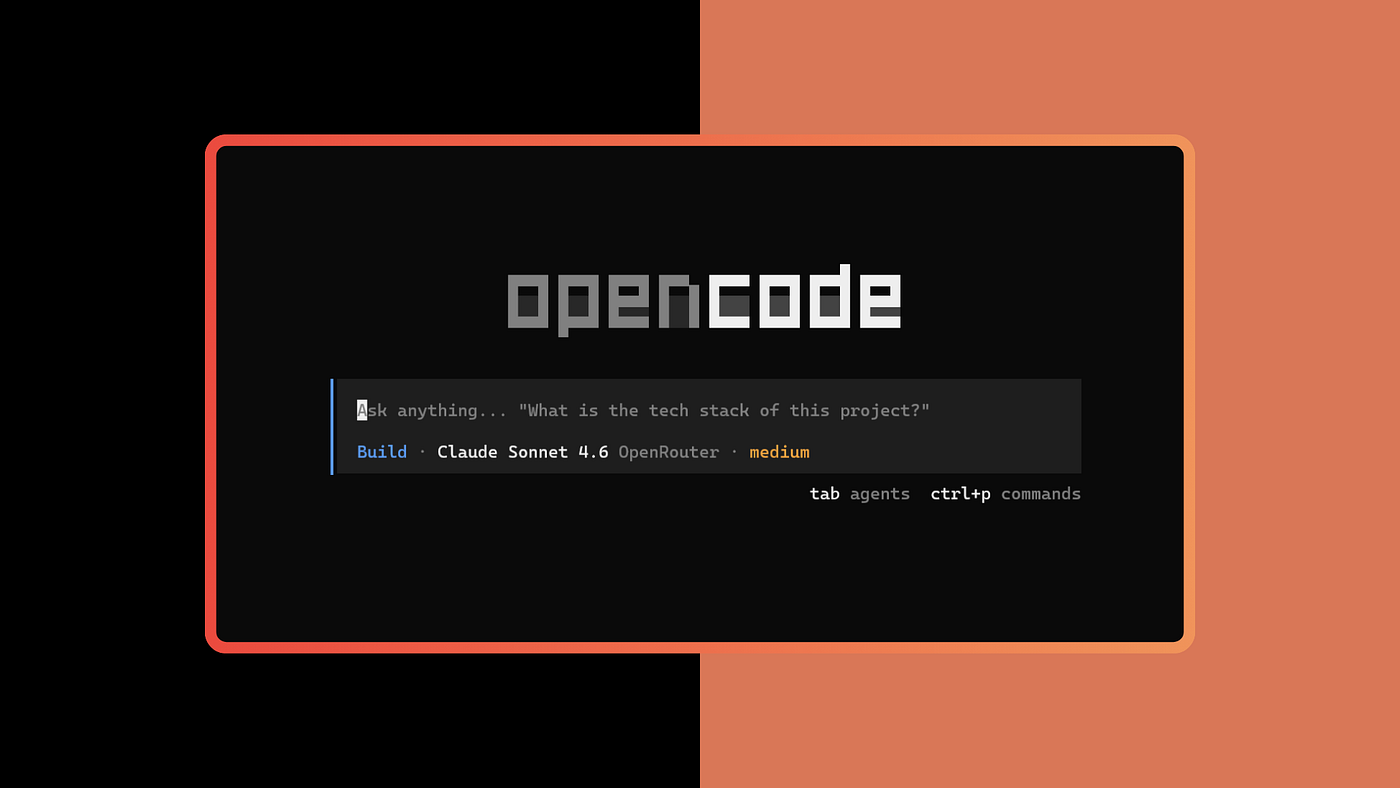
OpenCode is an open-source coding agent available through a terminal interface, beta desktop app, or IDE extension. Its catalog supports 75+ providers, including DeepSeek, as well as local models.
Build is its full-access development agent, while Plan is restricted for analysis. General, Explore, and Scout subagents cover complex tasks, read-only codebase searches, and dependency research. Permissions, LSP, MCP servers, plugins, and custom tools extend the workflow without requiring you to recompose its core.
For a broader view of its daily-driver tradeoffs, the existing OpenCode vs Claude Code comparison places OpenCode alongside other terminal coding agents.
The Differences That Matter in Daily Work
Setup, Interfaces, and Workflow Maturity
DeepSeek Harness ships with a Web UI as its default interactive experience: configure a model, select a workspace, and start a session that can edit files, run commands, plan, and delegate under the active approval policy.
OpenCode offers more interface choices and a familiar project-first flow. Initialize a repository in the TUI, or use its desktop or IDE experience. That flexibility matters for a tool kept open all day. DeepSeek Harness enables deeper architectural change, but its preview status adds migration risk.
Models and Provider Flexibility
A model generates decisions and code; the harness controls context, tools, permissions, retries, and sessions. OpenCode has the broader documented catalog, including DeepSeek and local models. DeepSeek Harness emphasizes DeepSeek but also supports catalog providers such as Anthropic and OpenAI, provider-specific authentication, and custom compatible endpoints.
When evaluating DeepSeek V4 Pro, separate reasoning mode, latency, tool behavior, and token cost from the harness. Results can change with different prompts, tool schemas, histories, or recovery loops.

Plugins: Convenient Hooks vs Runtime Composition
OpenCode plugins are JavaScript or TypeScript modules loaded locally or from npm. They can react to events, add tools, protect files, inject settings, send notifications, and modify behavior around tool execution.
DeepSeek Harness makes plugins the product structure. Profiles stack bundles; patches replace components; event seams intercept requests, tools, sessions, or turns. OpenCode is more direct for hooks and commands. DeepSeek Harness is built for replacing deeper pieces such as the session store, sandbox, tool pipeline, subagent provider, or UI layer.
Agents, Permissions, and Long-Running Tasks
OpenCode gives agents distinct prompts, models, tools, and permissions. Plan asks before edits and shell commands; Build is intended for full development work. Subagents can run automatically or by mention.
DeepSeek Harness derives model history from a durable session-event log. Plans, background jobs, delegation, and approvals can be mounted through its plugin tree. In either tool, agents that read private repositories or run commands need explicit boundaries. Apply practical AI agent security controls and grant only the required filesystem, network, and command access.
Performance and Cost: Test the Harness, Not Just the Model
As of August 17, 2026, there is no trustworthy basis for calling the official DeepSeek Harness faster, cheaper, or better at coding across real projects. It is new, and many older results used unrelated tools casually labeled a “DeepSeek harness.”
Two harnesses using the same model can make different tool calls, resend different context, compact history at different times, or recover differently. Those choices affect time, tokens, and the final diff.
Use a controlled trial instead:
- Select the same model and inference provider in both tools.
- Start from clean copies of the same repository and grant equivalent permissions.
- Give each tool the same scoped task and acceptance tests.
- Run the task at least three times.
- Compare correctness, diff quality, tests passed, wall time, tokens, retries, and the human cleanup required.
Direct API billing and bundled model services may have different prices, limits, caching, or routing. Compare the route you would actually use, not just the model label.
Which One Should You Choose?
Choose OpenCode for a Daily Coding Agent
Pick OpenCode for familiar terminal, desktop, or IDE work. It is the stronger default when broad model choice, documented customization, and lower migration risk matter most.
Choose DeepSeek Harness to Build a Custom Agent System
Pick DeepSeek Harness if you are an early adopter, plugin author, or platform team exploring custom agent loops, sessions, tool policies, sandboxes, or interfaces. Its flexibility comes with developer-preview risk.
Test Both Before Replacing a Working Setup
If OpenCode already works, run DeepSeek Harness beside it on a non-critical repository before switching. The best AI agent for coding guide can help separate terminal, IDE, cloud, and persistent-agent requirements.
Keep Coding-Agent Workflows Running with MyClaw
 Choosing a harness answers how an agent edits code. When work must continue after your laptop sleeps, you also need a home for reviews, tests, build diagnosis, and repo monitoring.
MyClaw provides a managed, always-on OpenClaw workspace for that persistent layer. It does not replace the active editing experience in either harness; it keeps tools, context, and background workflows available in a private hosted environment. The MyClaw coding-agent workflow covers PR reviews, tests, debugging, and maintenance.
Step 1: Launch a Persistent OpenClaw Workspace
Choose enough compute for your repositories, tests, and background processes so recurring work is not tied to one local terminal.
Step 2: Install the Coding-Agent Workflow
Add the coding-agent skill to delegate scoped work to OpenCode, Codex, Claude Code, or Pi and monitor it in the background.
Step 3: Assign Reviewable Background Work
Start with bounded tasks: summarize a pull request, generate tests, diagnose a failed build, or run a scheduled check. Keep human review before merging.
Final Verdict: Stability or Composability?
OpenCode is the practical choice for most developers today. DeepSeek Harness is more compelling when you want a deeply composable runtime and can absorb preview-stage changes.
Run the same real task through both, measure the result, and choose the harness that reduces your total work—not the one with the newest architecture or loudest demo.
Skip the Setup, Run Best-in-Class AI Agents Now
Launch a managed OpenClaw or Hermes Agent workspace in minutes, with always-on hosting, updates, and support handled by MyClaw.