Fable 5 vs Mythos 5: Differences, Access, Pricing, and Alternatives

By Emma Reed
MyClaw Editorial
MyClaw
Run Best-in-Class AI Agents Now
Run OpenClaw or Hermes Agent on managed MyClaw hosting, so your AI agent stays online, updated, and ready for real work.
AI Takeaway:
- Fable 5 vs Mythos 5 comes down to access and safeguards more than raw intelligence. Anthropic describes Claude Fable 5 as a widely released Mythos-class model with safety classifiers, while Claude Mythos 5 is limited to approved trusted-access programs.
- Fable 5 was built for long-horizon coding, deep knowledge work, vision, and agent workflows. Mythos 5 targets more sensitive domains, especially approved cyberdefense and research use cases.
- Current availability matters. Anthropic has said access to Fable 5 and Mythos 5 is unavailable after a US government directive, while other Claude models remain available.
- If you are building serious AI workflows, do not design around one model name. Use a primary model, a backup model, persistent context, and an agent runtime that can survive model changes.
- The practical choice is not simply "which model is strongest?" It is "which setup keeps the work moving when a model becomes unavailable, reroutes a request, or changes policy?"
Fable 5 vs Mythos 5 at a Glance
Claude Fable 5 and Claude Mythos 5 sit in the same Mythos-class family, but they are not offered in the same way. Fable 5 was designed as the general-use version: powerful enough for ambitious coding and knowledge work, but wrapped in additional safeguards. Mythos 5 is the more restricted version, intended for approved organizations working in trusted-access environments.
For a model-specific overview, the Claude Fable 5 model page is a useful companion because it frames the model around agent workflows rather than chat demos.
| Area | Claude Fable 5 | Claude Mythos 5 |
|---|---|---|
| Main role | General Mythos-class model for advanced work | Restricted trusted-access model |
| Model ID | claude-fable-5 | claude-mythos-5 |
| Access | Intended for broad API and cloud access, but currently unavailable | Limited to approved Project Glasswing / trusted-access customers |
| Safeguards | Includes safety classifiers | Safeguards lifted in selected approved areas |
| Fallback behavior | Sensitive requests may route to Opus 4.8 | Not a normal self-serve workflow |
| Pricing listed by Anthropic | $10/M input, $50/M output | $10/M input, $50/M output |
| Best fit | Coding, agents, documents, vision, complex analysis | Approved cyberdefense and sensitive research programs |
The short version: Fable 5 is the model most users were meant to evaluate. Mythos 5 is not a consumer upgrade path. It is a controlled-access version for specific organizations.
Why the Difference Matters Now
When Fable 5 launched, the obvious question was whether it brought Mythos-level capability to normal Claude users. That was a fair question because Anthropic positioned Fable 5 as a safe general-release version of the Mythos-class model.
Then access changed. Anthropic announced that both Fable 5 and Mythos 5 access became unavailable after a US government directive tied to national security concerns. That changed the practical meaning of the comparison. The question is no longer only which model is stronger. It is whether the model can be relied on inside a real workflow.
 That matters most when a task runs longer than one prompt:
- A code migration that takes hours or days
- A research brief that collects sources and revises findings
- A competitor monitor that checks pages every morning
- A document workflow that extracts data from charts and PDFs
- A support or operations assistant that keeps working after you close your laptop
If the model disappears mid-project, the workflow needs a recovery plan.
What Claude Fable 5 Is Built For
Fable 5 is best understood as a high-end agent model. Its value is not just answering a hard question. It is staying useful across a long sequence of decisions, tool calls, files, revisions, and checks.
Long-Horizon Coding
Fable 5 is especially relevant for Claude Code-style work: reading a codebase, planning changes, editing files, writing tests, running commands, and correcting mistakes. This is where a stronger model can make a visible difference. It can hold more context, reason through bigger changes, and validate its own work more often.
If you are comparing this with other agentic development tools, this recent piece on Hermes Agent vs Claude Code gives useful context for how coding agents differ once they move beyond a single local session.
Knowledge Work and Vision
Fable 5 is also built for document-heavy work: reading charts, tables, PDFs, screenshots, diagrams, and technical material. That makes it useful for market research, legal review, finance analysis, and product planning.
The model can be strong when the output is not a chat answer but a finished artifact: a comparison table, source-backed memo, spreadsheet, design review, or implementation plan.
Safeguards and Rerouting
Fable 5 includes classifiers for sensitive areas such as cybersecurity, biology, chemistry, and model distillation. If a request triggers those safeguards, Anthropic says it can be handled by Opus 4.8 instead.
That can be a good safety design, but behavior may vary by task. A harmless security review or dependency audit may still hit a conservative boundary. For production use, test the exact prompts and workflows you plan to run.
What Claude Mythos 5 Is Built For
 Mythos 5 is not the model most users can choose from a dropdown. It is meant for approved trusted-access use, especially in domains where Anthropic wants more control over high-risk capabilities.
Trusted Access, Not Self-Serve Access
Mythos 5 is tied to Project Glasswing and related trusted-access programs. The important point is simple: unless you are an approved customer in that program, Mythos 5 should not be part of your normal planning.
That does not make Mythos irrelevant. It explains why Fable 5 exists: Fable is the version designed to bring much of the capability into broader use while keeping safeguards in place.
Same Family, Different Operating Rules
Anthropic describes the two models as sharing the same underlying model family. The difference is how access and safety controls are applied. Fable 5 has the public-facing guardrail posture. Mythos 5 is reserved for narrower approved work.
So the better comparison is not "Fable is weak, Mythos is strong." It is "Fable is the usable public path, Mythos is the controlled-access path."
Which One Should You Choose?
For most work, the answer is straightforward: if Fable 5 becomes available again and your data policy allows it, use Fable 5 for demanding general work. Do not plan around Mythos 5 unless you already have approved access.
Use Fable 5 for Ambitious Agent Work
Fable 5 makes the most sense for:
- Large coding changes and test generation
- Claude Code-style loops
- Research synthesis
- Visual and document-heavy analysis
- Multi-step workflows that benefit from stronger planning
For always-on development work, the coding agent use case shows where a strong model matters, but the runtime matters too. A coding agent needs repos, terminal access, toolchains, GitHub context, and a place to keep working.
Use Mythos 5 Only If You Are Approved
Mythos 5 is not a better everyday subscription tier. It is for approved organizations with specific needs and a trust relationship around sensitive capabilities.
If you do not have that access, the practical question is what to use instead: Opus 4.8, Sonnet, GPT, Gemini, DeepSeek, MiniMax, Kimi, or another model that fits your cost, latency, context, and policy needs. MyClaw's broader models page helps compare that production mix.
Build the Workflow So the Model Can Change
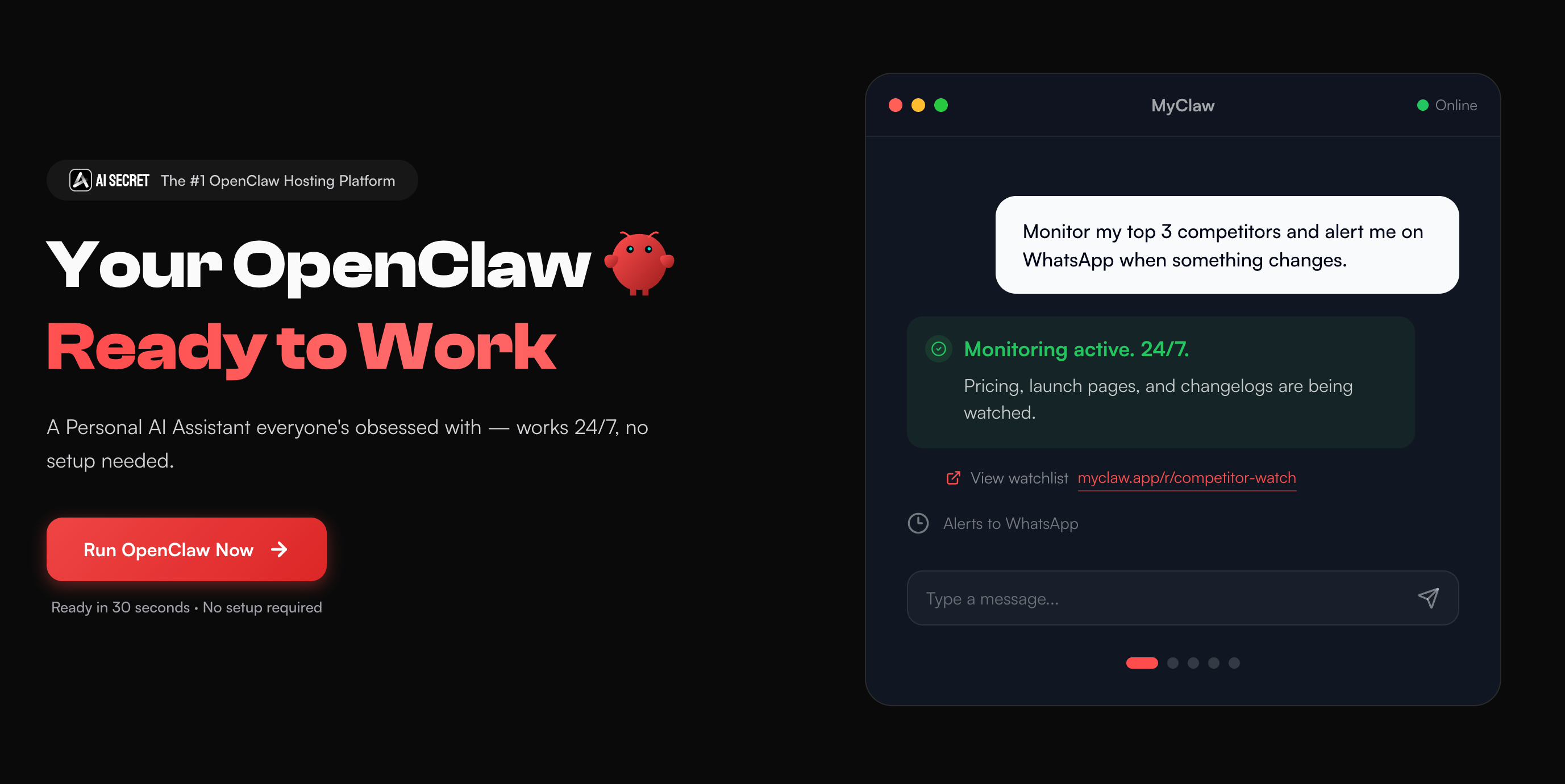 The Fable 5 vs Mythos 5 debate is a useful reminder: model capability is only one layer. A serious AI workflow also needs a stable runtime, connected tools, memory, files, permissions, and fallback behavior.
This is where MyClaw fits naturally. MyClaw hosts OpenClaw as an always-on agent environment, so you can run workflows across models, tools, channels, files, and skills without maintaining the infrastructure yourself.
Step 1: Pick the Job Before the Model
Start with the output. Do you want a code review, a daily competitor brief, a research memo, an inbox triage pass, or a support summary? The job determines the model, not the other way around.
Step 2: Set a Primary Model and a Backup Path
Use the strongest available model for the hardest reasoning step, but keep a fallback for continuation, summarization, routing, or lower-risk tasks. Even the best model is not infrastructure by itself.
Step 3: Let the Agent Keep the Context
Long-running work improves when the agent can keep notes, reuse prior decisions, and pick up where it left off. Skills such as Self-Improving Agent turn repeated sessions into retained workflow knowledge instead of starting from zero every time.
What to Check Before Using Fable 5 in Production
Before you build around Fable 5, check four things.
First, confirm availability. If access is still unavailable, choose a different primary model and revisit later.
Second, check data retention. Fable 5 has a 30-day retention requirement for safety monitoring, which may not fit every legal or enterprise policy.
Third, test the exact workflow. Safeguards can affect coding, security review, biology-adjacent research, or distillation-like prompts in ways generic benchmarks will not reveal.
Fourth, design for handoff. A production agent should be able to summarize its state, save files, and continue with another model when needed. This is especially important for research workflows where sources, evidence tables, and decisions need to persist over time.
The Bottom Line on Fable 5 vs Mythos 5
Fable 5 is the Mythos-class model most users were meant to use: powerful, general-purpose, and wrapped in safeguards. Mythos 5 is the restricted version for approved trusted-access work. If access is unavailable, neither should be treated as a dependable production dependency today.
The smarter move is to build workflows that can use frontier models without being trapped by them. Choose the best available model for the job, keep a backup path, preserve context, and run the work in an environment that does not disappear when your laptop sleeps or a model changes status.
Fable 5 vs Mythos 5 is an important model comparison. But for real work, the bigger lesson is simpler: the model matters, and the system around the model matters just as much.
Skip the Setup, Run Best-in-Class AI Agents Now
Launch a managed OpenClaw or Hermes Agent workspace in minutes, with always-on hosting, updates, and support handled by MyClaw.