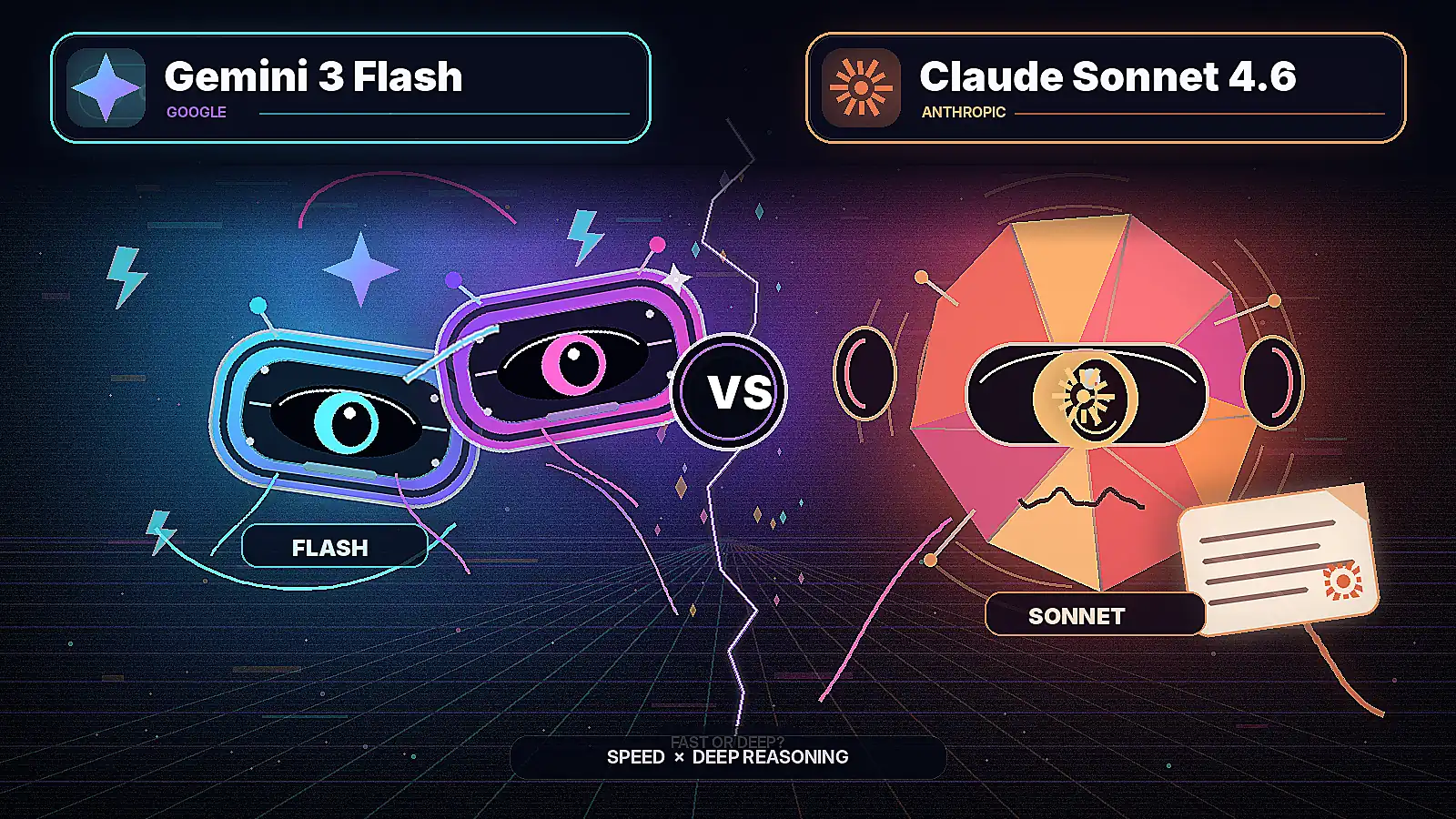
Gemini 3 Flash vs Claude Sonnet 4.6 for Coding: Which Model Should You Use?

By Nathan Cole
MyClaw Editorial
MyClaw
Run Best-in-Class AI Agents Now
Run OpenClaw or Hermes Agent on managed MyClaw hosting, so your AI agent stays online, updated, and ready for real work.
AI Takeaway
- Fast coding loops: Gemini 3 Flash is the better first pick when you want quick edits, low-latency answers, and lots of small agent steps.
- Deep code reasoning: Claude Sonnet 4.6 is stronger when the work needs planning, multi-file context, debugging judgment, or architecture tradeoffs.
- Real agent work: the better model is the one that finishes the task with fewer retries, cleaner tool use, and lower total cost.
- Production use: treat Gemini 3 Flash Preview carefully. It is useful for testing new capability, but serious workflows need backup models, budget limits, and a stable runtime.
- Best practical setup: use Gemini 3 Flash for speed, Claude Sonnet 4.6 for judgment, and switch based on the job.
Quick Verdict: Speed vs Judgment
Gemini 3 Flash and Claude Sonnet 4.6 are both useful for coding, but they are useful in different moments. Gemini 3 Flash is the model to try when the work needs motion: generate a patch, rewrite a function, summarize logs, compare approaches, or move through short agent steps quickly. Claude Sonnet 4.6 is the model to reach for when mistakes are expensive: reading a larger codebase, planning a migration, reviewing tricky logic, or explaining a bug that crosses several files.
That makes the comparison less about crowning one winner and more about matching the model to the task. A coding agent can use a fast model to explore, edit, and summarize, then use a deeper model for review or hard edge cases. MyClaw’s recent Gemini 3 Flash vs Qwen 3.5 article takes the same practical view: judge models by completed work, not by a single prompt.
| Task | Better First Pick | Why |
|---|---|---|
| Small code edits | Gemini 3 Flash | Fast iteration matters more than deep planning |
| Multi-file refactor | Claude Sonnet 4.6 | The model should reason before changing files |
| Log summaries | Gemini 3 Flash | Quick synthesis is usually enough |
| Architecture review | Claude Sonnet 4.6 | Tradeoffs need careful thinking |
| Long agent loops | Depends | Cost, retries, and tool discipline decide |
Which Model Is Better for Coding?
Code Generation and Small Fixes
 For everyday coding, Gemini 3 Flash works well as the starter model. It fits narrow changes: converting a helper function, generating a test scaffold, explaining an error, rewriting a component, or producing a few implementation options. The advantage is rhythm. When an agent needs to inspect a file, patch, run a command, read the error, and adjust again, faster turns keep the loop moving.
This is especially helpful when the task is already well-scoped. If the agent only needs to add a validation rule, update a small UI state, or draft a test case, a faster model can be the more efficient choice.
Multi-File Refactors and Codebase Reasoning
Claude Sonnet 4.6 is a better fit when the model has to slow down and hold more intent in its head. That includes refactors where a small change touches API routes, shared types, tests, and UI states, or debugging where the visible error is only the final symptom.
A good coding model should understand why a file exists, how nearby files depend on it, which tests matter, and where not to touch. If a task needs a plan before the first edit, Claude Sonnet 4.6 deserves the first attempt.
Tool Use Is the Real Test
A normal chat test can hide the difference between a model that writes plausible code and a model that can work inside a repo. For coding agents, the real test looks like this:
- find the right files
- make the smallest useful patch
- run the relevant check
- recover from the first failure
- summarize the risk clearly
That is why the environment matters. A hosted coding agent workflow gives the model access to repos, terminals, logs, and background runs. If you want more structured delegation, a skill such as coding-agent can hand focused tasks to Codex, Claude Code, OpenCode, or other coding agents in a controlled workflow.
Which Model Is Better for Thinking?
Gemini 3 Flash for Fast Reasoning
Gemini 3 Flash is not just a quick-answer model. Its best role is fast reasoning where the next step matters more than a long essay. It can triage logs, compare approaches, outline a patch, summarize documentation, or decide which file to inspect next. Agent work often moves in small loops, so this kind of fast judgment is genuinely useful.
Claude Sonnet 4.6 for Harder Planning
 Claude Sonnet 4.6 is stronger when the thinking itself is the work. Use it for migration plans, deep code review, architecture critique, unclear bugs, or decisions where the model should weigh tradeoffs before acting.
The difference is easiest to feel when the prompt has ambiguity. “Add caching to this API” sounds simple, but it raises questions about invalidation, data freshness, auth scope, tests, and failure behavior. A deeper model is more likely to pause before producing a patch that only works in the happy path.
The Useful Question
The question is not “which model is smarter?” The useful question is: how much thinking should happen before the next action?
If the cost of a wrong turn is low, Gemini 3 Flash is often enough. If the wrong turn creates a messy diff, a broken migration, or a security risk, use Claude Sonnet 4.6 first.
Preview, Cost, and Reliability Still Matter
Gemini 3 Flash Preview is attractive because it gives early access to newer capability. That is useful for experiments and workflow checks. It is less ideal as the only dependency for recurring work. Preview models can change, face different limits, or behave differently over time, so your setup should assume the primary model might not always be available.
Cost also needs a practical definition. Token price matters, but finished-task cost matters more. A cheaper model that retries five times, misses context, or breaks a tool call may cost more than a slower model that gets the task right once.
A simple setup is usually best:
- use the fast model for first passes and low-risk loops
- use the deeper model for review, planning, and hard debugging
- set a backup model for availability problems
- cap monthly spend so fast loops do not become surprise bills
For a broader view of available model choices inside MyClaw, the models page is a useful place to compare what can power an agent workflow.
Run the Model Inside a Real Coding Workflow
Model comparisons are helpful, but chat-only comparisons miss the point. A developer does not need a model that produces a polished answer in isolation. You need one that can work with your project, use tools at the right time, and leave behind a result you can review.
A real coding workflow has friction: dependencies fail, tests are slow, logs are noisy, and some actions should wait for approval. That is where the gap between an LLM and an agent becomes important. A model can answer; an agent can act, observe, and continue. MyClaw’s AI Agent vs LLM breakdown is useful if you are deciding whether chat is enough or you need an execution layer.
Build an Always-On OpenClaw Coding Setup with MyClaw
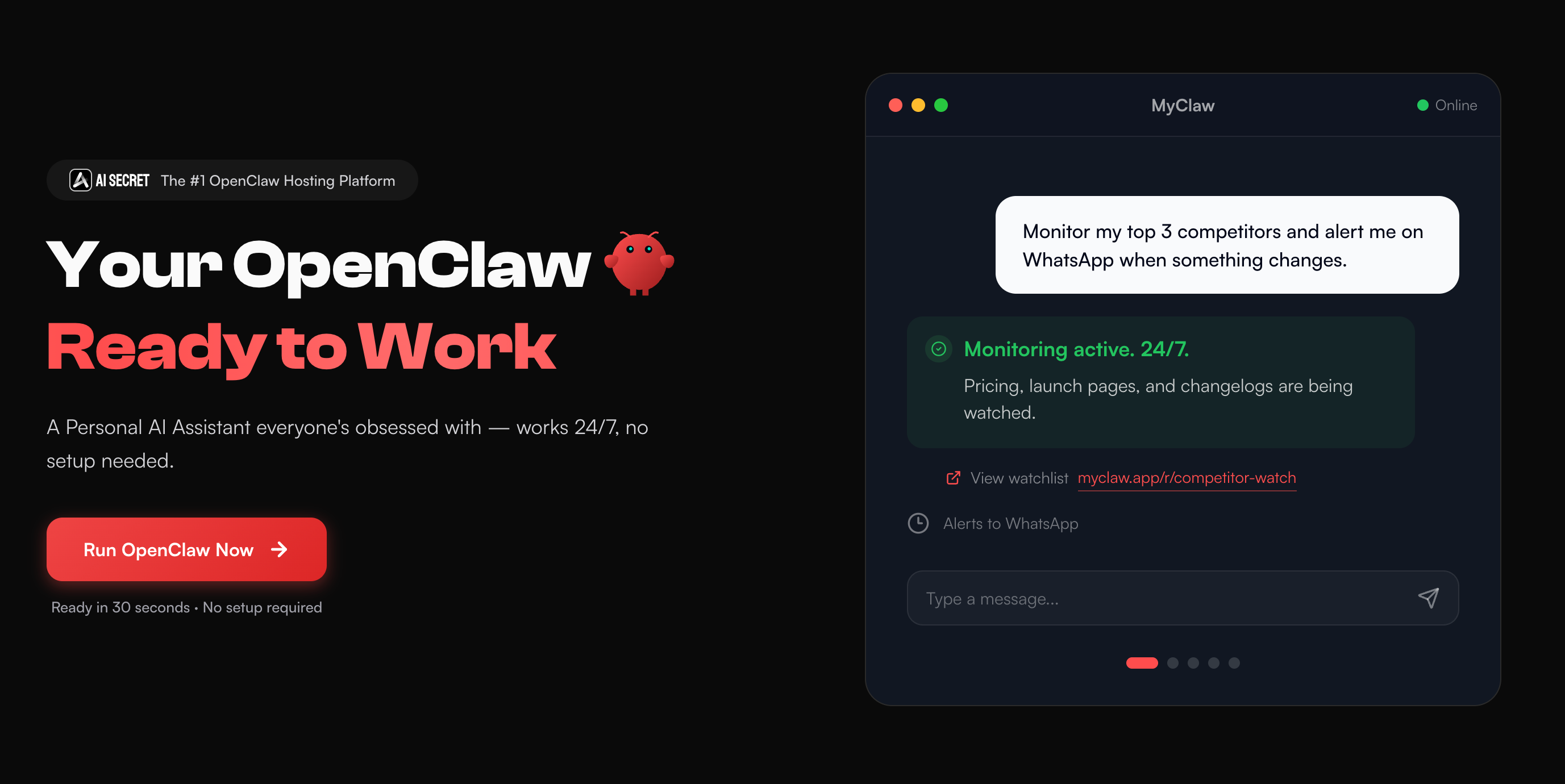 If you want this comparison to turn into shipped work, the model should live inside a stable workspace. MyClaw gives you a private hosted OpenClaw instance that can run continuously without setting up and maintaining OpenClaw yourself. That matters because coding work often takes longer than one chat session: tests run, builds fail, PRs need review, and the agent may need a cleaner second pass.
Step 1: Start a Private OpenClaw Instance
Launch a private OpenClaw instance so your coding agent has a place to run, keep context, use tools, and continue working even when your local machine is not the center of the workflow.
Step 2: Choose the Model Strategy
Use Gemini 3 Flash when you want fast movement: first drafts, log summaries, small edits, quick checks. Use Claude Sonnet 4.6 when you want judgment: architecture decisions, larger refactors, review comments, or unclear bugs.
Step 3: Add a Backup Model and Spend Limit
A serious agent setup should not stop because one model is unavailable or too slow for the moment. Add a backup model, then set spending limits so the agent can work freely inside a boundary you trust.
Which Should You Choose?
Choose Gemini 3 Flash If
Choose Gemini 3 Flash if your main problem is speed. It is a strong fit for quick code edits, short summaries, repeated agent actions, lightweight debugging, and cost-sensitive automation.
Choose Claude Sonnet 4.6 If
Choose Claude Sonnet 4.6 if your main problem is judgment. It is the better first pick for deep code review, complex debugging, migration planning, architecture decisions, and tasks where the model should reason carefully before touching files.
Use Both If
The most practical answer is often both. Let Gemini 3 Flash handle speed and motion. Let Claude Sonnet 4.6 handle the moments where a bad decision costs more than a slower response.
Conclusion
Gemini 3 Flash vs Claude Sonnet 4.6 is not a winner-takes-all comparison. Gemini 3 Flash is the practical choice for fast coding loops, frequent tool calls, and quick iteration. Claude Sonnet 4.6 is the stronger choice for deeper thinking, multi-file reasoning, code review, and high-risk debugging.
The better long-term workflow is to match the model to the job. Use speed when the task is low-risk and iterative. Use deeper reasoning when the task needs planning and judgment. Then run both inside an agent setup that has tool access, backup models, spend controls, and a place to keep working after the first response.
Skip the Setup, Run Best-in-Class AI Agents Now
Launch a managed OpenClaw or Hermes Agent workspace in minutes, with always-on hosting, updates, and support handled by MyClaw.