Gemma 4 vs Qwen 3.6: Which Model Should You Use for Coding and AI Agents?

By Julian Brooks
MyClaw Editorial
MyClaw
Run Best-in-Class AI Agents Now
Run OpenClaw or Hermes Agent on managed MyClaw hosting, so your AI agent stays online, updated, and ready for real work.
AI Takeaway
- Best overall first test: Qwen 3.6 is the stronger starting point for complex agent work, especially if Qwen 3.6 Plus is available in your workflow.
- Best for control: Gemma 4 is more attractive when open deployment, private infrastructure, and predictable operating costs matter.
- Best for coding agents: Start with Qwen 3.6 for repo-level coding tests. Compare Gemma 4 on the same task if privacy, cost, or self-hosting matters.
- Best decision method: Run both models in the same workflow with the same tools, files, budget, and scoring rules.
- Most important point: A model only becomes useful when the agent runtime can keep context, use tools, recover from errors, and finish work.
Quick Verdict: Qwen 3.6 for Agent Strength, Gemma 4 for Control
If you need one practical answer, test Qwen 3.6 first for agent-heavy work and Gemma 4 first for open, controlled deployment.
Qwen 3.6 has the stronger story for complex reasoning, coding agents, multilingual work, and tool-heavy execution. Qwen 3.6 Plus is especially relevant when you want managed model quality more than self-hosted control.
Gemma 4 is different. Its appeal is not just model quality, but the ability to run an open model path with more control over infrastructure, privacy, cost, and deployment. That matters for private code, internal documents, edge devices, and strict cost planning.
The decision is similar to other agent-tool comparisons, such as Hermes Agent vs Claude Code: the best choice depends less on a single "smarter model" label and more on the work the system has to complete.
| Need | Better First Pick | Why |
|---|---|---|
| Coding agent tasks | Qwen 3.6 | Stronger fit for tool-heavy, repo-level work |
| Open deployment | Gemma 4 | More control over hosting and infrastructure |
| Managed frontier workflow | Qwen 3.6 Plus | Better if you want a hosted, high-capability model |
| Private experiments | Gemma 4 | Easier to test under your own constraints |
| Recurring agent work | Depends | Measure cost per completed task, not per token |
Coding: Which Model Helps You Ship More?
Qwen 3.6 Is the First Coding Agent Test
 For coding, Qwen 3.6 is the model to test first. Not because Gemma 4 cannot write code, but because Qwen's recent model family has a stronger coding and agentic-workflow reputation. If the task involves understanding a repo, editing files, running tests, handling terminal output, and producing a reviewable patch, Qwen 3.6 is the more obvious starting point.
The right test is not "write a function." Use a real issue:
- inspect the codebase
- identify the likely files to change
- make the smallest useful patch
- run the relevant tests
- explain what changed and what still needs review
That is closer to the work described in the coding agents use case, where the agent handles PR reviews, test generation, failed builds, and repo maintenance rather than only answering coding questions.
Gemma 4 Still Has a Real Coding Role
 Gemma 4 becomes more interesting when coding work needs privacy, reproducibility, or lower operating risk. It can fit internal code review, local prototyping, private documentation analysis, or background tasks where every request does not need the strongest hosted model.
The question is not whether Gemma 4 can code. It can. The question is whether it can finish your kind of code work with less cleanup than Qwen 3.6.
Qwen 3.6 Plus vs Gemma 4: Hosted Strength or Open Flexibility?
Qwen 3.6 Plus and Gemma 4 represent two different ways to buy model capability.
Qwen 3.6 Plus is the stronger option if you want managed capability. Use it when the work is complex, changes often, and quality matters more than deployment control. This fits research agents, coding agents, multilingual planning, and workflows with frequent judgment calls.
Gemma 4 is stronger if control is the point. Choose it when you want more say over where the model runs, how costs are managed, which data leaves your environment, and how reproducible the setup is.
The Hidden Tradeoff
A hosted model can be more capable but harder to predict financially at scale. An open model can be more controllable but still requires infrastructure, monitoring, updates, fallback planning, and evaluation. A slightly weaker model in a stable private workflow may beat a stronger model that gets too expensive or hard to govern.
AI Agent Workflows Change the Comparison
Single Prompts Hide the Real Difference
Most model comparisons make everything look cleaner than it is. AI agents are messier. An agent has to read files, open a browser, call tools, remember instructions, handle partial failures, and stop before it changes too much.
For that kind of work, behavior matters more than personality. A useful coding agent should be cautious with existing architecture, direct about uncertainty, and willing to verify its own work. A useful research or SEO agent should compare sources instead of turning weak evidence into confident recommendations.
Measure Cost per Completed Task
Token price is only one part of cost. The better metric is cost per completed task: accepted patch, usable brief, useful SEO audit, resolved ticket, or finished report.
Tool discipline matters too. A model that skips evidence is expensive. A model that calls too many tools and never converges is also expensive. The best model is the one that finishes with the least cleanup.
If you need a more structured coding setup, the coding-agent skill is a useful example of treating coding as delegated background work instead of a single chat response.
How to Test Gemma 4 and Qwen 3.6 Fairly
Use the Same Work, Not Similar Prompts
The fairest comparison is simple: give both models the same task inside the same environment. For coding, use one real repo issue with the same files, commands, time budget, and definition of success. Score correctness, patch size, test quality, review effort, and fit with the existing code style.
For SEO or research, use a repeatable workflow: competitor monitoring, content refresh, weekly search visibility checks, or a source-backed brief. A workflow like the SEO AI agent use case forces the model to inspect live pages, compare sources, and produce something useful.
Score the Final Output
Use a small scorecard:
| Metric | What to Check |
|---|---|
| Completion | Did it actually finish the task? |
| Accuracy | Are the claims, code, or findings correct? |
| Cleanup | How much human editing remains? |
| Tool use | Did it use tools at the right moments? |
| Cost | What did the finished result cost? |
| Repeatability | Can the workflow run again next week? |
One run is not enough. Run three or four representative tasks. Qwen 3.6 may win on coding, Gemma 4 may win on cost-controlled checks, and Qwen 3.6 Plus may win on harder planning.
Run the Same Workflow in an Always-On Agent Workspace
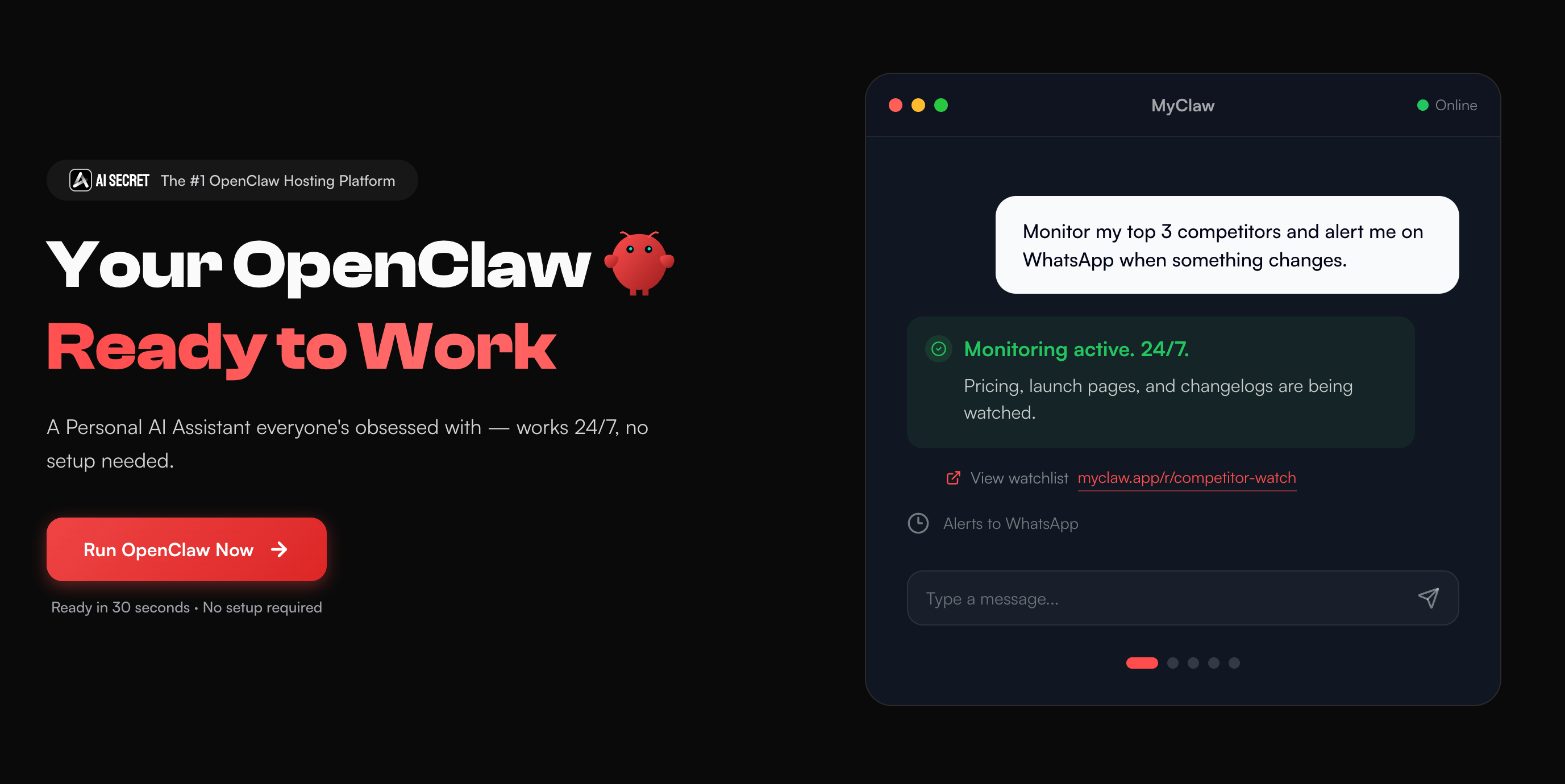 Model comparison becomes clearer when both models run in the same workspace. A chat window does not show how a model handles files, browser state, scheduled work, tool errors, or context over time.
MyClaw hosts OpenClaw in a private, always-on workspace. That gives you a practical way to test Gemma 4 and Qwen 3.6 against the same coding, research, SEO, or automation workflow while the task, files, tools, and scoring rules stay consistent.
That matters because the model is only one layer. The runtime decides whether the agent can keep working when your laptop is closed, use connected tools, retry safely, and produce work that is easy to review.
A Simple Test Plan
- Pick one repeatable task: PR review, bug fix, SEO audit, competitor check, or research brief.
- Run it with Qwen 3.6 or Qwen 3.6 Plus.
- Run it with Gemma 4 where your provider or deployment path supports it.
- Compare output quality, retries, runtime errors, cost, and cleanup.
- Keep the better model for that workflow and use the other as a fallback or specialist.
Which Model Should You Choose?
Choose Qwen 3.6 If
- you want the stronger first test for coding agents
- your workflow depends on tool use and multi-step reasoning
- you work across English and Chinese
- you care more about finished output than open deployment
- you are considering Qwen 3.6 Plus for managed agent work
Choose Gemma 4 If
- you want open model flexibility
- privacy or local control matters
- you need predictable infrastructure costs
- your tasks are repeated often enough to justify a controlled setup
- you can trade some peak capability for deployment freedom
Choose Both If You Run Real Agents
For serious agent workflows, the best answer is often not one model. Use Qwen 3.6 for hard coding and planning. Use Gemma 4 for controlled, repeated, private tasks. Keep Qwen 3.6 Plus for work where hosted quality matters most.
The advantage of an agent workflow is that model choice does not have to be permanent. Route by task, compare results, and change the default when quality, price, or availability shifts.
Conclusion
Gemma 4 vs Qwen 3.6 is really a choice between open control and agent-focused capability. Qwen 3.6 is the better first model to test for coding agents, tool use, and complex workflows. Qwen 3.6 Plus is more compelling when you want a strong hosted model experience. Gemma 4 is the better choice when open deployment, privacy, local control, and predictable cost matter.
Do not make the decision from a benchmark table alone. Put both models into the same workflow, give them the same tools and budget, and measure the work they finish. That is where the comparison becomes useful.
Skip the Setup, Run Best-in-Class AI Agents Now
Launch a managed OpenClaw or Hermes Agent workspace in minutes, with always-on hosting, updates, and support handled by MyClaw.