GPT-5.6 Luna vs GPT-5.4: Which OpenClaw Agent Model Should You Run?

By Alex Morgan
MyClaw Editorial
MyClaw
Run Best-in-Class AI Agents Now
Run OpenClaw or Hermes Agent on managed MyClaw hosting, so your AI agent stays online, updated, and ready for real work.
AI Takeaway
- Should GPT-5.4 be replaced with Luna? Start by testing Luna on repeatable, cost-sensitive agent work. Keep GPT-5.4 on complex, high-stakes jobs until the results prove otherwise.
- Is Luna cheaper? Yes. Luna costs $1/$6 per million input/output tokens, while GPT-5.4 costs $2.50/$15. The meaningful number, though, is cost per accepted result—not cost per token.
- Does Luna sacrifice long context? No. Both models support roughly 1.05M tokens of context. GPT-5.4 mini is cheaper, but its context window is 400K.
- Where does each model belong? Luna is a strong candidate for recurring research, monitoring, summaries, and routine tool work. GPT-5.4 is the safer control model for difficult planning, ambiguous debugging, and jobs where a missed detail is expensive.What is the lowest-risk migration path? Run the same real workflows on both models for a week, then route work by completion rate, latency, and cost per accepted result.
GPT-5.6 Luna vs GPT-5.4 at a Glance
Luna is substantially cheaper than GPT-5.4, yet both support roughly 1.05M tokens of context and up to 128K output tokens. That matters for long-running threads, large source sets, and repeated tool calls.
| GPT-5.6 Luna | GPT-5.4 | |
|---|---|---|
| Input price per 1M tokens | $1.00 | $2.50 |
| Cached input per 1M tokens | $0.10 | $0.25 |
| Output price per 1M tokens | $6.00 | $15.00 |
| Context window | ~1.05M | ~1.05M |
| Max output | 128K | 128K |
| Best starting point | High-volume, repeatable agent work | Complex professional work and a reliable control model |
The table is not the verdict. A lower token price disappears if an agent needs retries or produces work that must be rebuilt by hand. Treat Luna as a cheaper operating mode for work with a clear finish line, not an automatic replacement for every GPT-5.4 task. Check current pricing and account availability before changing a production default.
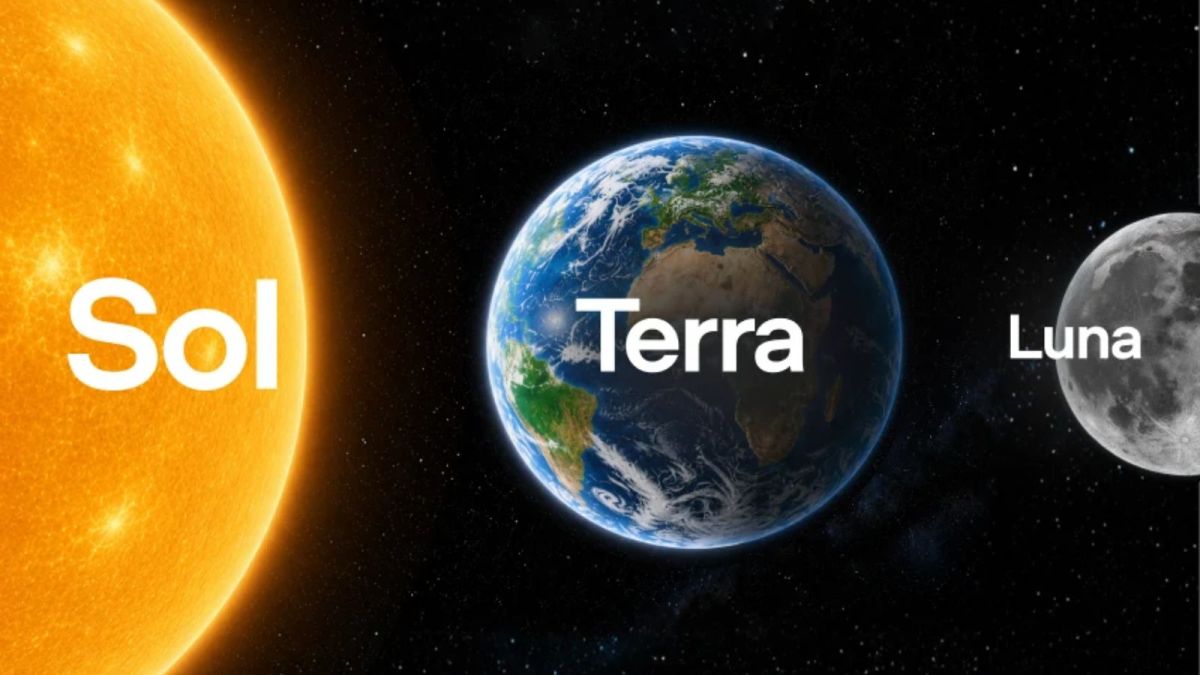
Luna is the lower-cost end of the GPT-5.6 family; Terra and Sol sit higher on the cost-and-capability ladder. The GPT-5.6 Sol model guide provides useful context when a job is too consequential to treat Luna and GPT-5.4 as the only options.
The Numbers That Actually Change Your Bill
For a daily research agent, Luna’s input and output rates are 60% below GPT-5.4’s. One daily run may not matter; dozens of runs across monitoring, triage, and scheduled maintenance make it an operating decision. Token pricing is only the model bill, however. Hosting, browser sessions, external tools, and correction time are separate costs.
What Public Benchmarks Can—and Cannot—Prove
Benchmarks establish a starting hypothesis, not a production answer. There is no single public, apples-to-apples test that reproduces a particular repository, inbox, browsing environment, or approval process. Use benchmarks to decide what to test; use task logs to decide what becomes the default.
Should You Move Your Default Agent from GPT-5.4 to Luna?
The practical question is not “which model is smarter?” It is whether lower cost is worth the risk for a given task. The useful split is how repeatable the job is and how expensive failure would be.
Choose Luna for Repeatable, High-Volume Agent Work
Luna is a good first choice for work with a stable prompt and a visible quality check:
- recurring source monitoring and concise change reports
- extraction, classification, tagging, and structured summaries
- first-pass research briefs with citations to review
- scheduled inbox triage and routing
- routine browser or tool tasks with a bounded scope
These jobs have a crisp rubric—correct fields, required sources, an approved format, or a pass/fail check—so Luna can be evaluated fairly without turning every background task into a premium request.
Keep GPT-5.4 for Work That Is Expensive to Get Wrong
Keep GPT-5.4 in the loop when instructions are incomplete, judgment spans competing options, or a wrong action creates expensive cleanup: a production bug, broad implementation plan, sensitive escalation, or decision-driving research conclusion. It can remain the primary model or the fallback after Luna fails a quality gate. An agent can use the Oracle skill to challenge assumptions before a risky plan moves forward.
Do Not Pick on Token Price Alone
Track completion without intervention, human acceptance, tool errors, elapsed time, and input/cached/output tokens. If Luna completes 95% of a recurring task cleanly and GPT-5.4 completes 97%, the answer depends on what the failed 2% costs. A smaller bill is not a saving if one bad run sends the wrong customer message or overwrites production settings.
Where Does GPT-5.4 Mini Belong?
GPT-5.4 mini is not simply “Luna for less money.” It is the economical choice for narrow utility work: heartbeats, basic classification, short summaries, extraction, and well-scoped subagent tasks. Luna earns its higher price when work needs more context, stronger judgment, or fewer recovery loops.
- GPT-5.4 mini: low-risk utility work that is easy to validate.
- GPT-5.6 Luna: recurring agent work that needs capability as well as cost control.
- GPT-5.4: ambiguous or high-impact work where a more cautious control model is worth paying for.
Do not force one “best model” across every agent. Labeling inbound messages and fixing a failed deployment are different jobs.
A Seven-Day Model Test for an Always-On Agent
Give both models the work that already matters. Pick three recurring tasks and run each at least five times with the same prompt, tools, permissions, and success criteria. A research-agent workflow is a good starting point because it tests browsing, synthesis, structured output, and evidence preservation.
Score the Result, Not Just the Output
Create one small scorecard for every run:
| Measure | Why it matters |
|---|---|
| Completed without intervention | Captures whether the task actually finished |
| Accepted after review | Separates polished-looking output from usable work |
| P50 and P95 runtime | Shows both normal speed and painful outliers |
| Tool failures and retries | Reveals hidden operational cost |
| Input, cached input, and output tokens | Explains the bill |
| Cost per accepted result | Produces the final decision metric |
Keep one successful transcript and one failed transcript from each model. That record makes it much easier to see whether a failure came from the model, the prompt, or the tool chain. If the test needs a persistent environment, use an always-on OpenClaw setup rather than a browser session that disappears with a laptop restart.
Promote One Model, Keep One Fallback
After a week, promote the winner only for the tasks it actually won. Luna may become the default for daily reports while GPT-5.4 remains attached to complex coding or exception handling. Revisit the setup when workload volume or the cost of mistakes changes.
Run the Test Without Turning Hosting into Another Project
A model comparison has little value if the agent stops when a laptop sleeps, loses browser state, or has no record of a failed run. The test needs an environment that stays online for schedules, messages, logs, and routine maintenance.
MyClaw provides a managed, private OpenClaw environment for that test. It keeps the focus on the agent’s work instead of a VPS, patches, and personal-machine uptime.
Step 1: Launch a Private Agent That Stays Online
Create an isolated OpenClaw instance, connect the approved OpenAI account or API key, and confirm the exact model ID. Availability can differ by organization, API access, and Codex workspace.
Step 2: Duplicate Three Real Workflows
Set up the same research, monitoring, and channel tasks for Luna and GPT-5.4. Keep prompts, schedules, permissions, tools, and acceptance criteria unchanged.
Step 3: Set the Default From the Evidence
Review usage and task history after seven days. If Luna lowers cost per accepted result without reducing reliability, make it the default for that workflow. Otherwise, keep GPT-5.4 where it earns its premium.
Conclusion
GPT-5.6 Luna vs GPT-5.4 is not a one-model-wins comparison. Luna is the first model to test for frequent, well-defined OpenClaw work because the price difference compounds quickly. GPT-5.4 remains valuable when a task is ambiguous, difficult, or costly to redo.
The best setup is usually a small routing policy backed by evidence: mini for utility work, Luna for capable recurring execution, and GPT-5.4 for work that deserves a larger safety margin. If hosting is part of the decision, this managed hosting vs VPS guide lays out the operational tradeoffs.
Skip the Setup, Run Best-in-Class AI Agents Now
Launch a managed OpenClaw or Hermes Agent workspace in minutes, with always-on hosting, updates, and support handled by MyClaw.