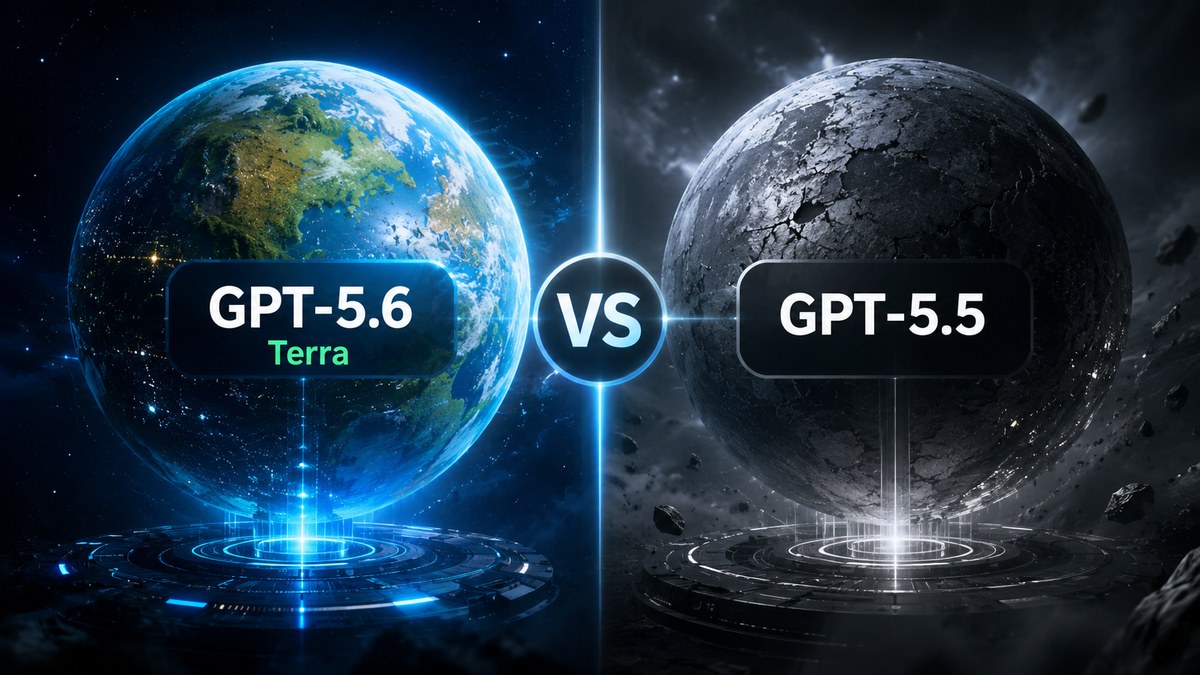
GPT-5.6 Terra vs GPT-5.5: Price, Access, and Agent Use Cases

By Alex Morgan
MyClaw Editorial
MyClaw
Run Best-in-Class AI Agents Now
Run OpenClaw or Hermes Agent on managed MyClaw hosting, so your AI agent stays online, updated, and ready for real work.
AI Takeaway
- Is GPT-5.6 Terra better than GPT-5.5? Not clearly yet. Terra is the balanced GPT-5.6 model, while GPT-5.5 is the more established option with broader access.
- What changed most? Price. Terra is listed at $2.50 input and $15 output per 1M tokens. GPT-5.5 is $5 input and $30 output per 1M tokens.
- Can you use Terra now? Not widely. GPT-5.6 is still in limited preview through API and Codex for selected organizations.
- Which model should run agent workflows today? GPT-5.5 is safer for production access. Terra is worth testing when cost-sensitive agent loops become the priority.
- What should decide the switch? Cost per finished task, retries, latency, review time, and whether the model completes the workflow without extra cleanup.
GPT-5.6 Terra vs GPT-5.5 at a Glance
GPT-5.6 Terra is not simply a renamed GPT-5.5. It sits inside the GPT-5.6 family as the balanced tier. Sol is the strongest tier, Luna is the lower-cost tier, and Terra sits between them. That makes Terra the model most likely to challenge GPT-5.5 for everyday agent work, if its real-world quality holds up.
| Factor | GPT-5.6 Terra | GPT-5.5 |
|---|---|---|
| Role | Balanced GPT-5.6 tier | Established frontier OpenAI model |
| Best fit | Cost-aware agent work and production testing | Stable coding, reasoning, and agent tasks today |
| Input price | $2.50 / 1M tokens | $5 / 1M tokens |
| Output price | $15 / 1M tokens | $30 / 1M tokens |
| Access | Limited preview through API and Codex | Broader ChatGPT, Codex, and API availability |
| Main caveat | Less public real-world data | Higher token cost at scale |
The practical answer is straightforward: GPT-5.5 is easier to use today, while Terra is the model to test as soon as access opens. If your work is occasional chat, the difference may be small. If your work runs inside agents that read files, browse pages, call tools, and retry commands, token price starts to matter quickly.
That is especially true for long-running work like a research agent workflow, where the model may need to gather sources, compare evidence, and revise a brief over multiple steps.
What Changed With GPT-5.6 Terra
Terra Is the Balanced GPT-5.6 Option
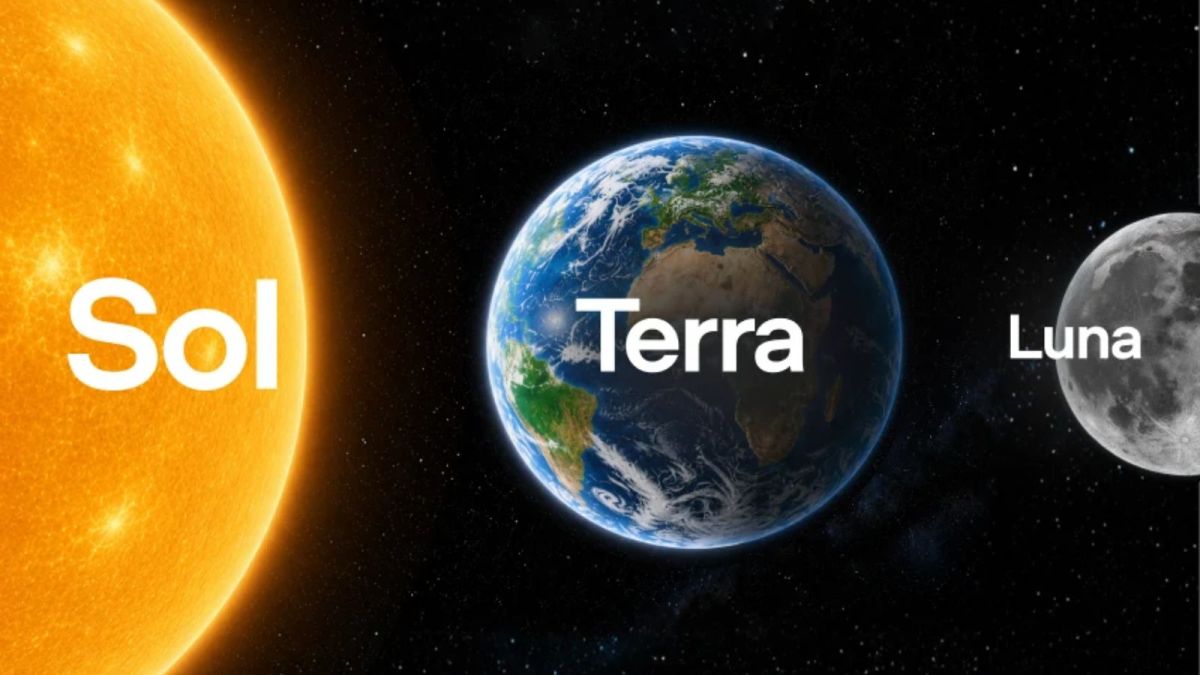
Terra matters because it targets the middle of the model stack. Most production automations do not need the most expensive model for every step. They need a model strong enough to inspect context, follow tool results, and produce useful output without turning every run into a premium reasoning job.
The GPT-5.6 Sol model page is useful as the top-end reference point. Terra is different. Its value depends less on peak benchmark performance and more on whether it can handle repeated work at a better price.
Pricing Is the Main Story
The published prices make Terra hard to ignore:
- GPT-5.6 Terra: $2.50 input and $15 output per 1M tokens.
- GPT-5.5: $5 input and $30 output per 1M tokens.
That is a 50% reduction before caching, platform costs, or routing strategies. If a monthly workflow uses 100M input tokens and 20M output tokens, GPT-5.5 would cost about $1,100 in raw token spend. Terra would cost about $550.
The catch is quality. A model that costs half as much but causes twice as many failed runs does not save money. The metric that matters is cost per accepted result.
Access Still Changes the Decision
Terra's pricing is attractive, but availability is still limited. GPT-5.6 models are in preview through API and Codex for selected organizations. GPT-5.5 is the practical choice when the work has to ship now. Terra belongs in a testing bucket until access and quality are proven for your workflow.
When GPT-5.5 Still Makes More Sense
You Need Reliable Access Today
GPT-5.5 is the safer pick when uptime, access, and known behavior matter more than token savings. This includes production coding agents, customer-facing operations, internal reporting, and workflows that depend on predictable API or Codex availability. If your prompts, tool schemas, and review steps already work with GPT-5.5, do not trade that stability for a cheaper line item without evidence.
Your Workflow Is Quality-Capped
Some workflows are limited by correctness, not token price:
- Security review where a missed issue is expensive.
- Code changes where failed tests create more work.
- Research summaries where weak source handling creates bad decisions.
- Customer support automation where tone and accuracy matter.
For those cases, the winning model is the one that reaches an acceptable answer with fewer retries and less cleanup. If coding agents are the main use case, test real repo work like the workflows in the coding agents use case, not a short prompt in isolation.
You Already Have a Working Evaluation Loop
If you already evaluate GPT-5.5 with task suites, human review, or production traces, keep that loop. Terra should beat GPT-5.5 on task completion, retries, tool-call errors, tokens per finished task, review time, and severity of mistakes.
When GPT-5.6 Terra Could Be the Better Choice
High-Volume Agent Loops
Terra becomes most interesting when the model is called again and again. Agents are exactly that kind of workload.
A coding agent might read an issue, inspect files, run commands, edit code, handle test failures, and respond to review notes. A research agent might open sources, compare evidence, and draft a brief. A browser automation agent might check pages, compare changes, and send alerts.
In these workflows, a 50% token price reduction can turn an occasional assistant into something that runs every day. The Coding Agent skill is a practical way to compare models on real tasks instead of abstract impressions.
Cost-Aware Coding and Research
Terra may become a strong worker model, but that does not mean it should handle every task alone.
| Workflow step | Model strategy |
|---|---|
| Classification, routing, simple extraction | Lower-cost model |
| Main coding, research, or browser task | GPT-5.6 Terra |
| Complex debugging, risky review, final reasoning | GPT-5.5, GPT-5.6 Sol, or another top model |
| Final formatting and summaries | Lower-cost or balanced model |
This routing pattern is more realistic than choosing one model for everything. The better question is not "which model wins?" It is "which model should handle this part of the workflow?"
Model Switching Should Be Tested
When Terra becomes available, do not switch everything at once. Start with a task that has a clear expected output: review three pull requests, summarize five technical sources, monitor competitor pricing for one week, or generate tests for one module.
If Terra completes the work with similar quality at lower cost, give it more traffic. If it struggles, keep it for lower-risk steps.
A Practical Way to Test These Models in Real Work
 Model comparisons get more useful when the model has a real workspace. A serious agent needs files, browser access, tools, terminal commands, context, and a place to keep working when your laptop is closed. MyClaw gives you a hosted agent workspace for that kind of test, so the comparison feels like production work instead of a clever prompt in a blank chat.
Step 1: Pick One Workflow That Actually Matters
Choose one repeatable task with visible value. "Review new pull requests every morning" is better than "test coding." "Monitor three competitor pricing pages" is better than "browse the web."
Write down the expected output before you run the model: risk summary, changed-files list, test results, source links, or a short recommendation.
Step 2: Run the Same Task Across Models
Keep the workspace, files, tools, prompts, and success criteria stable. Change only the model. Run GPT-5.5 first, then Terra when you have access, then any serious alternative.
Track the basics: did it finish, did it use the right tools, how many tokens did it use, how much editing did the result need, and would you trust it to run again?
Step 3: Promote the Model That Wins the Job
Once a model wins a workflow, give it more work. If it fails on edge cases, narrow its role. Terra does not need to be the smartest model in your stack to be valuable. It needs to handle the repeatable middle cheaply and reliably.
The best outcome is not one model doing everything. The best outcome is a mix where routine work is affordable, hard work gets enough intelligence, and humans review decisions that deserve judgment.
Quick Recommendation
Use GPT-5.5 if you need stability, access, and known behavior today. It is the safer default for production workflows with working prompts, tools, and review patterns.
Test GPT-5.6 Terra when access is available if your agent budget is sensitive to token cost. It is especially promising for high-volume work: reading, comparing, drafting, routing, and summarizing.
Use GPT-5.6 Sol or another premium reasoning model only where extra capability changes the outcome. Hard debugging, complex planning, security-sensitive review, and final synthesis are better candidates than routine extraction.
If your work involves agentic coding, it is also worth looking at how newer agent systems move beyond single coding sessions. The comparison in Hermes Agent vs Claude Code is a useful companion because model choice is only one part of the agent stack.
Conclusion
The short answer to GPT-5.6 Terra vs GPT-5.5 is this: GPT-5.5 is the safer model today, while GPT-5.6 Terra is the model to test when lower-cost agent work becomes the priority. Terra's published pricing is compelling, but price alone is not the decision. The real test is whether it completes the same workflow with fewer dollars, acceptable latency, and no extra cleanup.
If you are choosing for chat, GPT-5.5 may be enough of an answer. If you are choosing for agents, build a repeatable task, run both models through the same tools and context, and measure the cost per finished result. That is where Terra either becomes a real upgrade or just another model name on a comparison table.
Skip the Setup, Run Best-in-Class AI Agents Now
Launch a managed OpenClaw or Hermes Agent workspace in minutes, with always-on hosting, updates, and support handled by MyClaw.