GPT-5.6 vs Claude Opus 4.8: Which Model Should You Use for AI Agents?

By Alex Morgan
MyClaw Editorial
MyClaw
Run Best-in-Class AI Agents Now
Run OpenClaw or Hermes Agent on managed MyClaw hosting, so your AI agent stays online, updated, and ready for real work.
Start HostingAI Takeaway:
- Better for coding? GPT-5.6 Sol looks strongest when you can access it and need frontier coding or cybersecurity-aware reasoning. Claude Opus 4.8 is the safer practical pick when you need a capable model available now.
- Better for agent work? Claude Opus 4.8 has strong signals around long-running workflows, uncertainty handling, and dynamic task execution. GPT-5.6 is promising, but access limits matter.
- Better value? Compare cost per finished task, including retries, tool calls, context, latency, and failed runs.
- Best choice? Use the model that can reliably run your actual workflow today, and keep your setup flexible enough to switch models as access, pricing, and benchmarks change.
GPT-5.6 vs Claude Opus 4.8: Quick Comparison
GPT-5.6 vs Claude Opus 4.8 is not just a benchmark question. Both are built for serious work. The better choice depends on whether you need access today, deeper reasoning, steadier coding collaboration, or an agent that keeps working across tools.
For normal chat, either model will feel powerful. The difference becomes more important when the task involves a repo, browser, terminal, files, long context, or several steps that need to survive mistakes. A brilliant answer is useful. A finished task is better.
| Need | Better Starting Point |
|---|---|
| Available model access today | Claude Opus 4.8 |
| Frontier coding and cyber-aware reasoning | GPT-5.6 Sol, if available |
| Long-running agent tasks | Claude Opus 4.8 or GPT-5.6 with strong runtime support |
| Cost control | Measure cost per completed task |
| Production agent setup | Use a workspace where models can be swapped |
For a broader view, MyClaw's AI model directory is useful because it frames models by task instead of launch claims.
Access Is the First Real Difference
The first practical difference is access. GPT-5.6 has been discussed as a suite: Sol as flagship, Terra as balanced, and Luna as faster lower-cost. That lineup is interesting, but limited preview access changes the recommendation. If you cannot get reliable access to GPT-5.6 Sol, it cannot be the default production choice yet.
Claude Opus 4.8 is easier to evaluate today. It is positioned around stronger coding, reasoning, knowledge work, and more careful behavior when unsure. That makes it a better starting point when availability matters.
If you are deciding between OpenAI's newest tiers, the comparison of GPT-5.6 Sol vs Terra vs Luna is worth checking before you treat GPT-5.6 as one single thing.
Coding: Repo Work, Debugging, and Code Review
For software work, the answer depends on what kind of coding you mean.
Use GPT-5.6 for Deep Frontier Coding When You Have Access
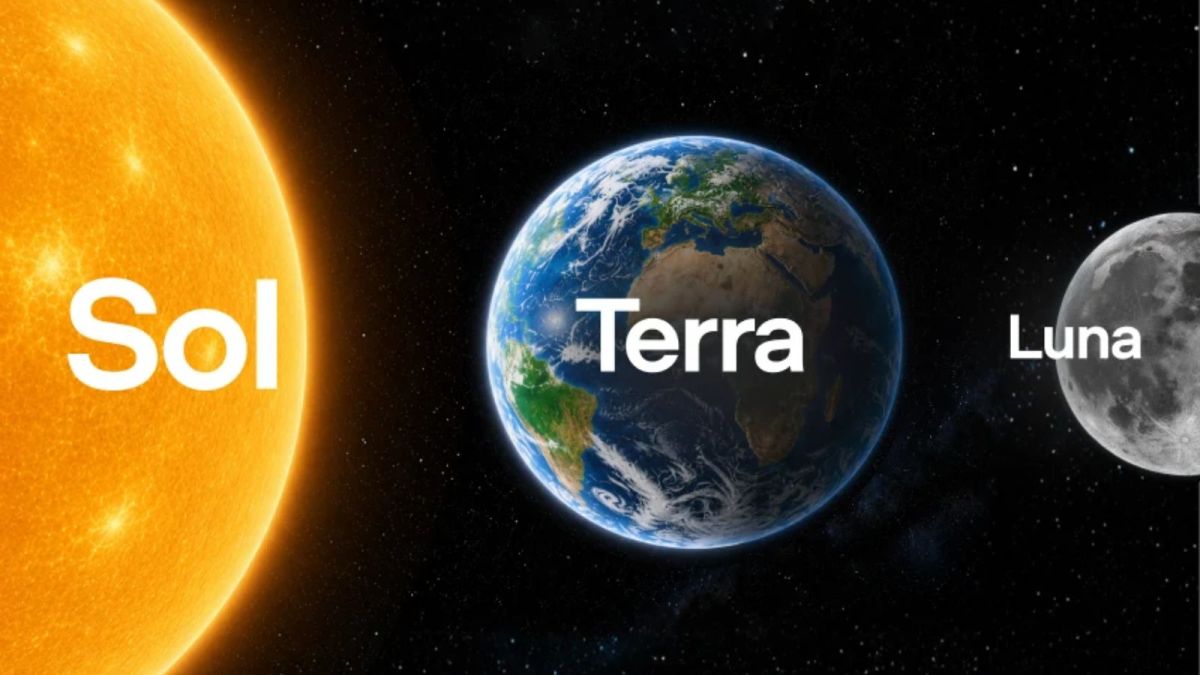
GPT-5.6 Sol is the more exciting option for very hard technical work: complex repo refactors, security-aware reasoning, deep debugging, and long technical planning. If access is available and the task is difficult enough, it deserves a serious test.
The catch is reliability of access. A preview model can be impressive and still hard to build around. For daily coding, limited access may be better treated as an advanced testing lane.
Use Claude Opus 4.8 for Coding Collaboration
Claude Opus 4.8 is easier to recommend for code review, implementation planning, debugging, and long-context repo work. Its biggest value is not just writing code. It can question assumptions, flag uncertainty, and avoid acting overly confident when the plan is weak.
Coding agents often fail in practical ways: missing a file, misunderstanding a convention, changing too much, or passing a test while missing a design issue. If your work looks like repo maintenance, reviews, migrations, or async implementation, start with the MyClaw coding agent use case, then test which model finishes cleaner.
For repeatable repo tasks, a focused skill also helps. A model can be strong on its own, but a structured workflow like the Coding Agent skill gives it a clearer operating pattern for code-heavy work.
Agent Work: Browser, Tools, and Long Tasks
Agent work is where the comparison gets more interesting. A chat model answers. An agent checks pages, edits files, runs commands, drafts reports, monitors changes, and asks for approval when actions become risky.
The Real Test Is Task Completion
Benchmarks are useful, but they do not show the whole shape of agent work. A good agent model needs to track the goal, use tools without thrashing, recover from bad intermediate results, and know when to stop.
Claude Opus 4.8 looks strong for long-running workflows because it leans into careful reasoning, self-checking, and configurable effort. That helps with research, code migration, document analysis, and multi-step operations.
GPT-5.6 could be excellent here too, especially if Sol's deeper reasoning and sub-agent style modes are available. The practical issue is still the same: if access is narrow, you need a fallback model for daily work.
For research-heavy tasks, the MyClaw research agent use case is a good evaluation frame. The question is not whether the model can summarize one page. It is whether it can gather evidence, compare sources, preserve context, and produce useful work.
Price and Cost per Finished Task
Token price matters, but it is not the full bill. A cheaper model can become expensive if it needs several retries, loses context, overuses tools, or creates work that takes a human another hour to clean up.
The better comparison is cost per finished task.
Measure:
- How often the run finishes without a restart
- How many tool calls the model needs
- How much context it burns
- Whether it asks useful clarifying questions
- How much review the final output needs
- Whether the model can recover after a mistake
This is why the best model varies by task. A faster model can be right for monitoring and routine summaries. A deeper model can be worth it for refactors, audits, legal analysis, and high-impact research.
Safety: Stronger Models Still Need Guardrails
Model safety and runtime safety are related, but they are not the same thing. A model can be more cautious while the agent around it still has access to files, credentials, browsers, repos, APIs, customer records, and payment systems.
Once a model can browse, code, execute commands, and run for hours, the environment matters as much as the model. You want isolation, backups, permissions, logs, rollback, and clear approval points, especially around production code, customer data, or billing tools.
Better reasoning lowers some risks. It does not remove the need for a safe place to run.
Test Both Models in a Real Agent Workspace
The cleanest way to compare GPT-5.6 and Claude Opus 4.8 is to run the same task in the same environment. That is where MyClaw fits naturally: it gives you a hosted, always-on agent workspace with tools, files, browser workflows, scheduled tasks, and model flexibility.
Step 1: Launch an Always-On Agent
Start with a hosted agent workspace so uptime, VM resources, backups, browser/tool access, and a private environment are already handled. The goal is to compare models, not debug infrastructure.
Step 2: Give It One Real Task
Pick a task that matters: review a repo, monitor pricing, research a market, draft a report, triage an inbox, or run a recurring SEO check. Run the same task with GPT-5.6 when available and Claude Opus 4.8 as the comparison.
Step 3: Judge the Finished Work
Compare finished output, retries, time to completion, tool-use quality, review burden, and whether the model asked smart questions. The model that feels more impressive in chat is not always the model that finishes the job better.
Which One Should You Choose?
Choose GPT-5.6 if you have access to GPT-5.6 Sol, your task is technically complex, and you want to test the frontier. It is especially interesting for advanced coding, security-aware reasoning, and hard planning.
Choose Claude Opus 4.8 if you need a strong model you can use today, especially for coding collaboration, long-running work, careful analysis, and workflows where reliability matters more than a launch-day peak.
Use model routing if your work varies. Some tasks need speed. Some need deep reasoning. Some need cheaper routine execution. Some need the strongest available model. The best setup is not loyalty to one model. It is a workflow where the model can change without rebuilding the whole system.
Conclusion: GPT-5.6 vs Claude Opus 4.8 Comes Down to Finished Work
GPT-5.6 vs Claude Opus 4.8 does not need one permanent winner. GPT-5.6 may be the more exciting frontier option when access is available, especially for complex coding and high-end agent tasks. Claude Opus 4.8 is the more practical choice when you need a strong, available model for coding, research, and long-running work today.
The best answer is to test both against the same real task. If your goal is finished work, the winning setup is a flexible agent workspace where you can switch models, measure results, and keep the runtime stable while the model race keeps changing.
Skip the Setup, Run Best-in-Class AI Agents Now
Launch a managed OpenClaw or Hermes Agent workspace in minutes, with always-on hosting, updates, and support handled by MyClaw.
Get Started