Kimi K3 vs GPT-5.6 Sol: Coding, Cost & Agent Tests

By Emma Reed
MyClaw Editorial
MyClaw
Run Best-in-Class AI Agents Now
Run OpenClaw or Hermes Agent on managed MyClaw hosting, so your AI agent stays online, updated, and ready for real work.
Start HostingAI Takeaway
- Which model is stronger overall? GPT-5.6 Sol holds a narrow lead on independent broad-intelligence testing. Kimi K3 stays close and wins several agentic, visual, and long-horizon evaluations.
- Which is better for coding? Sol is the safer choice for difficult repository engineering and controlled reasoning. K3 is highly competitive in terminal work, frontend creation, visual iteration, and long autonomous runs.
- Which costs less? K3 lists at $3 per million input tokens and $15 per million output tokens, compared with Sol at $5 and $30. K3 can use many more reasoning tokens, so the final cost of a completed task may be much closer.
- Can you self-host them? Sol is closed. K3 weights are promised by July 27, 2026, but they are not available yet, and Moonshot recommends infrastructure with at least 64 accelerators.
- What is the practical answer? Choose by workload: Sol for control and difficult engineering; K3 for visual creation, extended agent runs, and future open-weight flexibility.
Kimi K3 vs GPT-5.6 Sol at a Glance
Both models target multi-step agent work. K3 competes through lower list pricing and planned open weights. Sol offers finer reasoning controls, greater token efficiency, and a more mature coding ecosystem.
| Category | Kimi K3 | GPT-5.6 Sol |
|---|---|---|
| Best fit | Visual coding, long agent runs, research | Difficult repository work, controlled reasoning |
| Context window | 1M tokens | 1.05M tokens |
| Maximum output | Not disclosed on the launch page | 128K tokens |
| API price | $3/M input, $0.30/M cache hit, $15/M output | $5/M input, $0.50/M cache hit, $30/M output |
| Reasoning control | Max at launch; low and high modes planned | Multiple effort levels from none through max |
| Weights | Planned for July 27, 2026 | Closed |
| Access | Kimi, Kimi Work, Kimi Code, API | ChatGPT, Codex, OpenAI API |
The dedicated GPT-5.6 Sol model guide covers its pricing, family tiers, and agent workflow strengths in more detail.
What the Coding and Agent Benchmarks Really Show
Artificial Analysis scores Kimi K3 at 57 on its Intelligence Index and GPT-5.6 Sol at max effort at 59. Task-level results mix independent tests with Moonshot's launch comparison, so source and setup matter as much as the decimal point.
| Evaluation | Kimi K3 | GPT-5.6 Sol | Source / What It Suggests |
|---|---|---|---|
| Intelligence Index | 57 | 59 at max | Independent; narrow Sol lead overall |
| Terminal-Bench 2.1 | 88.3 | 88.8 | Moonshot comparison; near-tie with different harnesses |
| DeepSWE | 67.5 | 73.0 | Moonshot comparison; Sol leads on repository engineering |
| AA-Briefcase | 1,548 Elo | 1,495 Elo | Independent; K3 leads on agentic knowledge work |
| GDPval-AA v2 | 1,668 Elo | 1,748 Elo | Independent; Sol shows stronger professional-work polish |
| BrowseComp | 91.2 | 90.4 | Moonshot comparison; narrow K3 edge |
Coding Strength Depends on the Kind of Code
Sol's DeepSWE advantage matters for hard changes in real repositories, especially inside Codex. K3 becomes more interesting when code must be built and visually inspected together. Moonshot highlights frontend, games, CAD, and GPU kernels, while acknowledging that K3 still trails Sol overall.
The Harness Can Change the Winner
Prompts, tools, retry rules, context management, and the coding harness all affect an agent benchmark. Moonshot used Kimi Code for K3 and Codex for Sol in several coding tests, rather than one identical environment. Treat a half-point lead as a near-tie, not a universal win.
Sol Offers More Control Over Reasoning
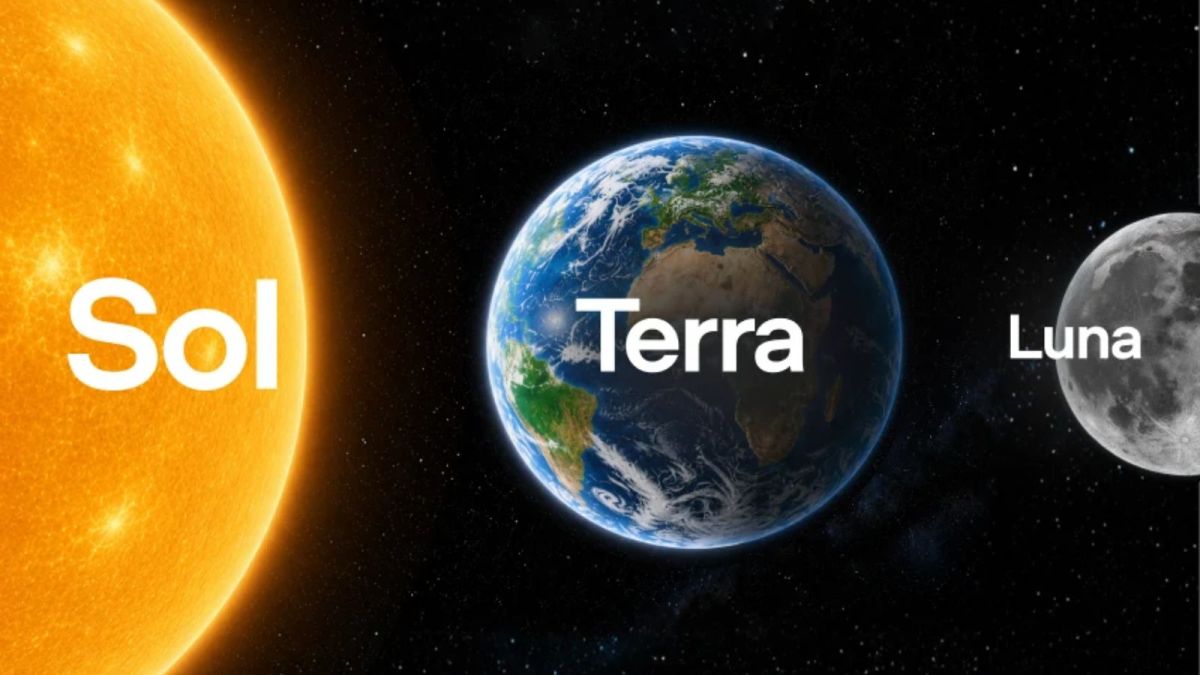
K3 launches with max reasoning by default, with low and high modes still to come. Sol can move from no reasoning through max, allowing a cheaper pass for routine work and deeper thinking for a difficult escalation. The broader GPT-5.6 Sol, Terra, and Luna comparison shows why that control matters when one workflow contains both simple and difficult steps.
Which Model Costs Less in Real Use?
API Price Favors Kimi K3
K3 costs $3 per million uncached input tokens, $0.30 for cached input, and $15 per million output tokens. Sol costs $5 for input, $0.50 for cached input, and $30 for output. OpenAI also charges $6.25 per million tokens written to cache.
OpenAI applies a 2x input and 1.5x output multiplier when a Sol prompt exceeds 272K input tokens. K3's launch price is presented across its 1M context window. ChatGPT, Codex, and Kimi subscriptions should not be compared directly with raw API rates.
A Cheaper Token Is Not Always a Cheaper Result
Artificial Analysis recorded roughly 130 million output tokens for K3 across its Intelligence Index, compared with about 70 million for Sol at max effort. K3's output tokens cost half as much, but it used almost twice as many in that evaluation. Total evaluation spending ended up in a similar range.
For a real workflow, the useful calculation is:
real task cost = model spend + retries + elapsed time + human review + failure cost
A reliable first attempt can be cheaper than three discounted attempts. Test a representative batch and count accepted results rather than judging from one impressive demo.
Open Weights Do Not Make K3 Easy to Self-Host
Moonshot says K3's full weights will be released by July 27, 2026. As of July 17, they are promised rather than downloadable, and the final license still needs to be checked. Until that happens, calling K3 open source or currently self-hostable goes too far.
Moonshot recommends supernodes with 64 or more accelerators. Open weights may expand provider choice, auditability, and regional deployment, but most teams will still use an API or specialist host. The recent guide to Kimi Claw alternatives separates that infrastructure decision from the model decision.
GPT-5.6 Sol remains closed. Its weights are not available, but its API and Codex integration remove the burden of serving the model. In either case, model hosting and agent hosting are different layers: an OpenClaw workspace can keep files, tools, memory, and scheduled jobs available while the chosen model runs through an API.
Choose Kimi K3 or GPT-5.6 Sol by Workload
Choose Kimi K3 for Visual and Long-Running Work
K3 is a compelling option for frontend creation, game development, visual iteration, research, and long tasks with clear finish lines. Its lower list price also leaves room for validation runs. Keep an eye on reasoning length, because a verbose run can consume the apparent savings.
Choose GPT-5.6 Sol for Difficult Engineering
Sol is the safer default for unfamiliar repositories, complex refactors, architecture decisions, and changes where failure creates expensive cleanup. Adjustable reasoning makes it easier to match effort to risk. A practical code automation workflow should measure successful patches, tests, and review effort rather than code volume alone.
Use Both When the Workload Is Mixed
K3 can handle visual implementation, evidence gathering, or selected long runs, while Sol can review risky changes or take over difficult engineering. Switch at task boundaries with a concise handoff and a clean session. Moonshot specifically warns that moving to K3 midway through an existing session can destabilize its output because it expects its prior reasoning history to be preserved.
Test Both Models on Work You Actually Need Done
The fairest test uses the same job, files, tools, permissions, and definition of success. MyClaw provides an always-on agent workspace where supported models can use repositories, browser tools, files, skills, and schedules. Check current availability before starting.
Step 1: Pick a Job With Some Teeth
Choose something that matters this week: a bug that has survived the backlog, a competitor report due Friday, or a screenshot that needs to become a working interface. Write down the deliverable, time limit, and three checks that decide whether the result is usable.
Step 2: Run Two Clean, Matched Sessions
Give each model the same workspace, files, terminal or browser access, and success criteria. Start from fresh sessions. If one model receives a helpful clarification, give the other the same information or count the original miss.
Step 3: Keep the Winner for That Job
Compare completion, corrections, elapsed time, model spend, and human review. The winner may differ by task: one model for repository repair, another for visual creation or research. Once a setup succeeds consistently, add the appropriate skill or schedule and let the agent repeat it.
Kimi K3 or GPT-5.6 Sol: The Final Verdict
The Kimi K3 vs GPT-5.6 Sol decision is close enough that workload matters more than a universal ranking. Sol is the safer default for controlled, difficult engineering and efficient reasoning. K3 is more attractive for visual creation, extended agent work, lower list pricing, and future open-weight flexibility. Use the benchmark table to form a hypothesis, then choose the model that finishes your real task with fewer retries, lower total cost, and less cleanup.
Skip the Setup, Run Best-in-Class AI Agents Now
Launch a managed OpenClaw or Hermes Agent workspace in minutes, with always-on hosting, updates, and support handled by MyClaw.
Get Started