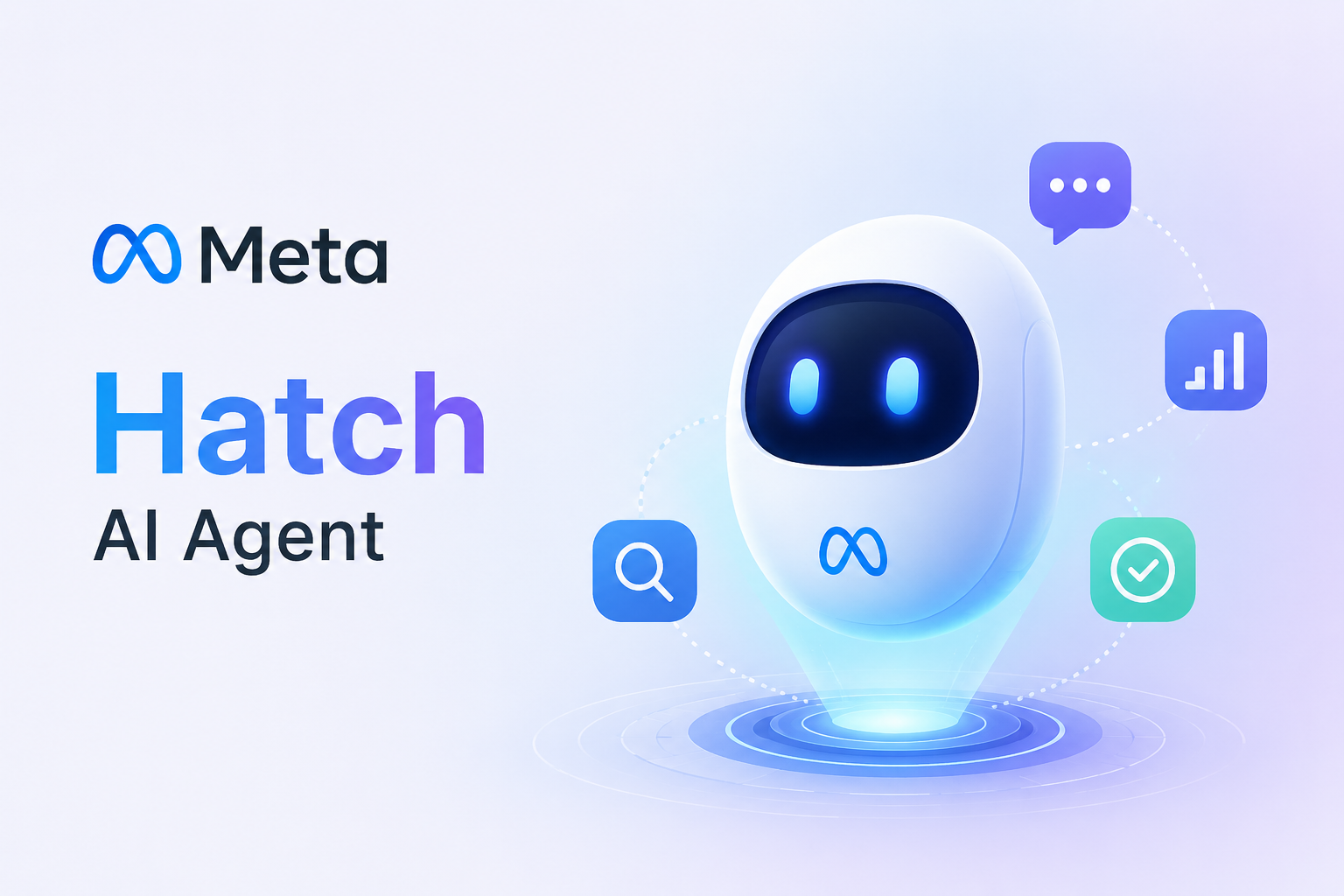
Meta Hatch AI Agent: Price, Release Date, and OpenClaw Comparison

By Alex Morgan
MyClaw Editorial
MyClaw
Run Best-in-Class AI Agents Now
Run OpenClaw or Hermes Agent on managed MyClaw hosting, so your AI agent stays online, updated, and ready for real work.
AI Takeaway
- What is Meta Hatch? The Meta Hatch AI agent is a reported consumer agent designed to understand goals and complete multi-step tasks across apps and services.
- Can you use Hatch now? No. It is still in internal development, and Meta has not announced a public release date.
- How much will Hatch cost? Meta is considering several tiers, according to reporting, including a premium plan costing up to $199.99 per month. Final pricing is unknown.
- Is Hatch the Instagram shopping agent? Not exactly. Early reports describe Hatch and Meta's agentic Instagram shopping tool as separate projects.
- How does Hatch compare with OpenClaw? Hatch appears intended to make OpenClaw-style autonomous assistance easier for mainstream users. OpenClaw is available now and offers more control, but usually requires self-hosting or managed hosting.
What Is Meta Hatch?
The Meta Hatch agent is a reported consumer AI project being developed by Meta. Reports describe it as an assistant that can work toward a goal, choose the required steps, use connected services, and complete multi-step tasks instead of only answering questions.
Hatch is not the same as today's Meta AI assistant. Meta AI mainly answers and creates inside conversations, while Hatch is reportedly designed to take action and keep working. Meta has not confirmed its final name, features, release date, or pricing.
What Could Meta Hatch Actually Do?
Meta has reportedly tested Hatch in simulated versions of services such as DoorDash, Reddit, and Etsy. Its exact capabilities have not been announced, but it may be able to:
- Research products or services and compare options
- Draft emails, forms, summaries, or recommendations
- Complete multi-step tasks across connected apps
- Remember preferences and context across conversations
- Monitor a task or goal over time
- Ask for approval before purchases, bookings, messages, or account changes
Work Across Apps, Not Just Inside Meta
 An agent becomes more useful when it can move between services. Planning a trip could involve comparing hotels, checking a calendar, creating a budget, and messaging the final plan. It also becomes harder to secure because every service has different permissions and interfaces. Meta has not confirmed which third-party apps Hatch will support or how it will connect to them.
Keep Working Toward Longer Goals
The most interesting Hatch tasks may not be one-time requests. An agent that remembers a goal could watch prices, prepare a weekly brief, or check for meaningful changes without starting from zero. A competitor monitoring agent, for example, can repeatedly check pricing pages and product updates, then report only what changed. The value comes from continuity, not one impressive answer.
Hatch Is Not Meta's Instagram Shopping Agent
Hatch is often described as an Instagram shopping agent, but early reports discussed two separate projects.
Hatch is reportedly a broader consumer agent for tasks across Meta products and third-party services. The separate shopping tool is designed for Instagram commerce, potentially helping users discover and purchase products without leaving the app. The projects may eventually share technology, but there is no confirmation that every Instagram shopping feature will be part of Hatch.
| What reports indicate | What is still unknown |
|---|---|
| Meta is investing in personal, business, and commerce agents | Whether Hatch will launch under that name |
| Hatch is a broader consumer agent project | Whether Hatch and the shopping agent will merge |
| A separate Instagram shopping agent is in development | Which features will be available at launch |
Meta Hatch Release Date, Price, and Availability
Meta Hatch is not publicly available. Meta has not announced a launch date or waitlist, and the final Meta Hatch price is unknown.
Reports published in May 2026 said Meta wanted to complete an internal testing milestone by the end of June 2026. That is not a public release date. Internal testing may be followed by additional development, limited trials, or regional rollouts.
Pricing is equally unsettled. According to reporting, Meta is considering multiple Hatch tiers, with a premium option costing as much as $199.99 per month. Higher-priced plans may include substantially more daily task capacity. These details are under consideration, not a final commercial offer.
Would a $200 Hatch Plan Be Worth It?
 A $200 monthly plan would put Hatch closer to a professional productivity tool than a casual assistant. It would need to finish meaningful work reliably, save several hours each month, and provide clear controls for tasks involving sensitive accounts or money. Until Hatch launches with clear limits and real-world results, its value cannot be judged from the rumored price alone.
Meta Hatch vs. OpenClaw
Hatch appears to be Meta's attempt to make an OpenClaw-like agent accessible to a mainstream audience. That does not mean Hatch uses OpenClaw code; no technical relationship has been confirmed.
OpenClaw is an open-source agent runtime that can use browsers, files, APIs, messaging channels, developer tools, and skills. It is available now, but requires decisions about hosting, models, permissions, and maintenance. Hatch is expected to hide much of that complexity inside a Meta-managed product.
Meta is not alone in moving toward always-on assistants. Microsoft Scout follows a similar direction, although it is more focused on workplace automation. This Microsoft Scout review explains how the approaches differ.
| Category | Meta Hatch | OpenClaw |
|---|---|---|
| Availability | Reported internal project | Available now |
| Product approach | Consumer-friendly, Meta-managed agent | Open-source, configurable agent runtime |
| Main ecosystem | Expected to connect deeply with Meta products | Browsers, files, APIs, chat apps, tools, and custom skills |
| Hosting | Expected to be Meta-managed | Local machine, private server, VPS, or managed hosting |
| Model choice | Unconfirmed | Multiple model providers, depending on configuration |
| Setup | Expected to prioritize ease of use | Requires setup unless hosted |
| Pricing | Unconfirmed | Runtime, hosting, model usage, and maintenance costs |
Hatch may have easier onboarding because Meta can connect it to familiar accounts and place it inside apps already used every day. The tradeoff is dependence on Meta's limits, policies, pricing, and data practices.
OpenClaw offers more control and portability. It can be shaped around unusual workflows, connected to different models, and run in an environment chosen by the user. That flexibility places it alongside other open-source AI agents, but it also creates operational work that a closed product can hide.
Best Meta Hatch Alternatives Available Today
You cannot use Hatch yet, but the closest Meta Hatch alternatives already offer the broader idea: an agent with tools, memory, a persistent workspace, and the ability to work across channels.
Run OpenClaw Yourself
 Self-hosting OpenClaw gives you the greatest control over where it runs, which models it uses, and what it can access. It works best if you are comfortable securing a server, configuring integrations, managing updates, and troubleshooting the runtime. A local installation is useful for testing, but recurring tasks need a reliable, always-on home.
Use Managed OpenClaw Hosting
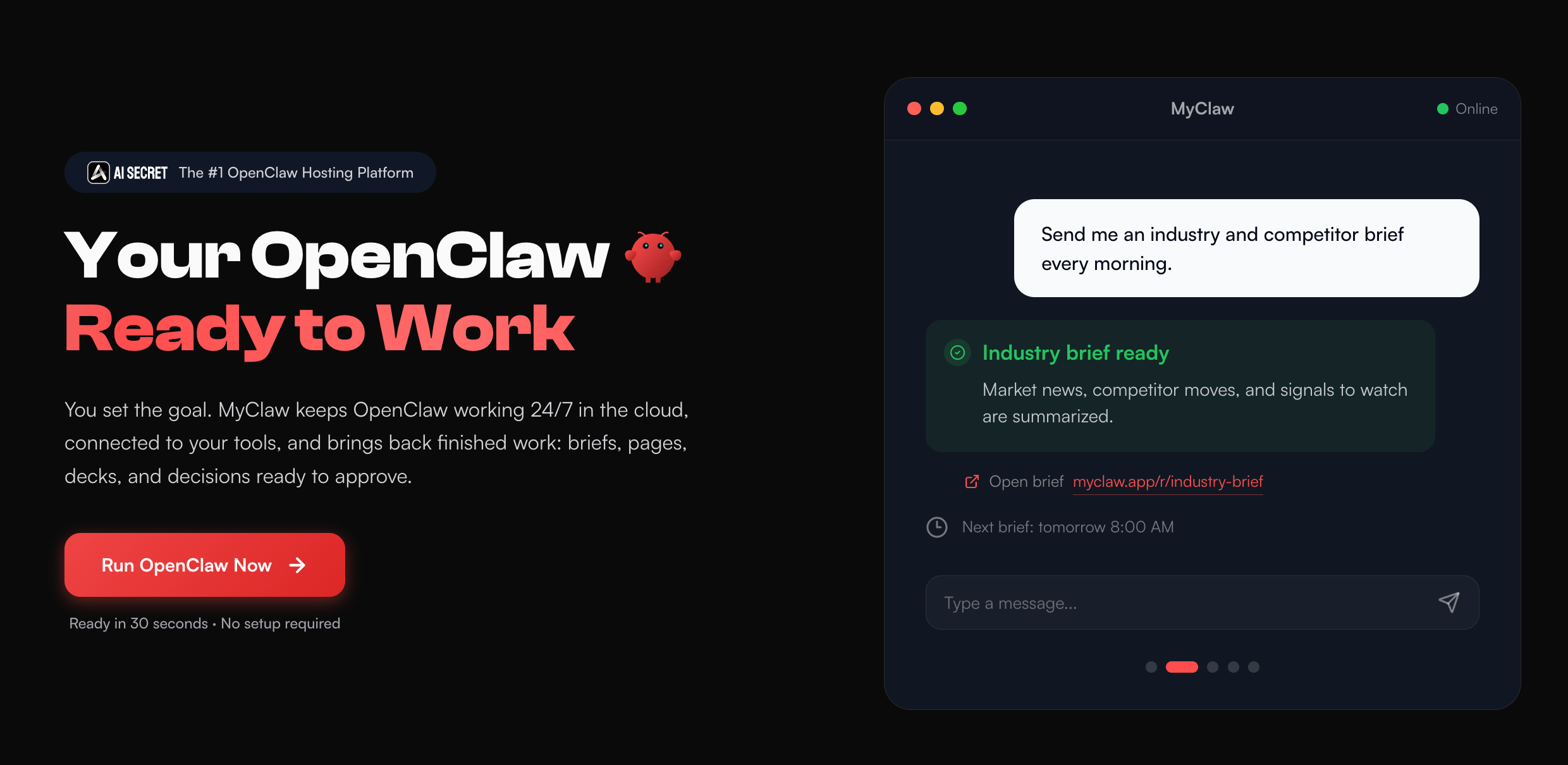 MyClaw is a practical option when you want OpenClaw's flexibility without operating the server behind it. It runs a private OpenClaw instance, keeps it online 24/7, and handles infrastructure maintenance. You can connect tools and messaging channels, choose from multiple models or bring your own key, and add focused capabilities through skills. A skill such as Proactive Agent shows the idea in practice: the agent can notice issues and suggest the next move before every step is requested.
Can You Trust Meta Hatch With Your Accounts?
The more useful an agent becomes, the more access it needs. An assistant that only writes a paragraph has limited power. An assistant that can read email, use accounts, make purchases, or send messages needs strong boundaries.
Before giving Hatch or any other agent broad access, the important questions are practical:
- What data can it read?
- Which actions require confirmation?
- Can a task be stopped immediately?
- Are actions logged and reversible?
- Can permissions be limited by app, task, or time?
- Is personal data used for model training?
These controls matter more than a polished demo. An agent may misunderstand a request, encounter malicious content, or choose the wrong action. The system around the model must limit damage and make recovery possible. This guide to AI agent security explains the risks in more detail.
Meta has the resources to build careful approval systems, but Hatch may sit close to personal conversations, social activity, and shopping. It will need to show exactly what it can see and do, not simply promise convenience.
Is Meta Hatch Worth Waiting For?
Hatch may be worth waiting for if you want a simple agent built closely into Meta's apps. The reported vision is compelling, but the final features, price, integrations, safety controls, and launch date remain uncertain. It should be judged by the work it finishes, the control it gives back, and whether that convenience earns enough trust.
Anyone curious about this kind of agent does not have to wait. OpenClaw can be run today, and MyClaw offers a managed path for keeping a private OpenClaw instance online without taking on the server setup and maintenance yourself.
Skip the Setup, Run Best-in-Class AI Agents Now
Launch a managed OpenClaw or Hermes Agent workspace in minutes, with always-on hosting, updates, and support handled by MyClaw.