Best Vellum AI Alternatives for an Always-On Personal Assistant

By Alex Morgan
MyClaw Editorial
MyClaw
Run Best-in-Class AI Agents Now
Run OpenClaw or Hermes Agent on managed MyClaw hosting, so your AI agent stays online, updated, and ready for real work.
AI Takeaway
- Best overall for always-on work: MyClaw is the strongest Vellum AI alternative when you want a private, managed OpenClaw workspace that keeps working after your laptop closes.
- Best for full open-source control: OpenClaw is the right choice when you want to run the runtime, models, skills, and security setup yourself.
- Best for Windows and Linux without self-hosting: A browser-first hosted workspace is usually the cleanest path. MyClaw gives you a persistent agent without requiring a native Mac app or a server project.
- When Vellum is worth it: Vellum makes sense for Mac-first work that depends on its native desktop experience and its approach to memory and permissions.
- Best for fixed app-to-app automation: n8n is better when every trigger, branch, and action should be defined in advance. An agent workspace is better when the work needs research, judgment, and follow-through.
First, Which Vellum are We Talking About?
Vellum is an unusually ambiguous name. One product is book-formatting software for Mac. Another, older Vellum product is an LLMOps platform for teams building and evaluating AI features. This guide is about Vellum's current personal AI assistant: the tool that can live locally on a Mac or in the cloud, remember context, connect to services, and take actions.
LLM evaluation platforms such as LangSmith and Langfuse solve a different engineering problem. The useful question is simpler: what kind of AI assistant do you want to rely on every day, and where should it run?
Best Vellum AI Alternatives at a Glance
| Tool | Best For | Hosting Model | Main Tradeoff |
|---|---|---|---|
| MyClaw | Always-on AI work across tools and channels | Managed OpenClaw workspace | Less low-level control than self-hosting |
| OpenClaw | Builders who want full control | Self-hosted | You own setup, security, and upkeep |
| Hermes Agent | Server-oriented, self-hosted agents | Self-hosted | More technical day to day |
| Claude Cowork | Focused reasoning and document work | Hosted | Less suited to persistent background work |
| Lindy | Ready-made email and business admin | Hosted | More closed and template-led |
| n8n | Visible, repeatable app automation | Hosted or self-hosted | A workflow builder, not a personal agent |
1. MyClaw: Best for Work That Should Keep Moving
The biggest difference between a promising AI demo and a useful assistant is what happens after the first conversation. A task still needs to run when your laptop sleeps, a report still needs to arrive on Monday, and an inbox still needs attention when you are in meetings. MyClaw is built around that continuity.
It provides a managed OpenClaw workspace rather than another chat tab. The agent can be reached from the browser, email, Telegram, or WhatsApp, and runs in a dedicated environment for long-lived tasks, selected models, connected tools, and finished results. That makes it a practical fit for competitor monitoring, research briefs, inbox triage, coding tasks, content operations, and scheduled reports.
MyClaw is not trying to replace a native Mac control surface. If local desktop interaction is the heart of your workflow, Vellum deserves a close look. But when the goal is a managed agent that stays available across devices and channels, MyClaw offers a more direct path than installing and maintaining a local stack.
How to Use MyClaw in Three Steps
Step 1: Give It One Job That Matters
Start with an outcome, not an open-ended instruction. “Send me a Monday competitor brief,” “triage my priority inbox,” or “watch these pricing pages for changes” gives the agent a clear job and a useful definition of done.
Step 2: Connect the Tools and Channel for That Job
Add only the files, apps, repositories, or data the work needs. Then decide where you want the result: a browser workspace for review, Email for a daily brief, or Telegram or WhatsApp for quick decisions.
Step 3: Put It on a Schedule, Then Improve It
Let the first runs teach you what is missing. Tighten the instructions, add a review step where it matters, and turn a good result into a recurring responsibility before giving the agent another one.
2. OpenClaw and Hermes Agent: Best for Owning the Stack
OpenClaw for Maximum Flexibility
OpenClaw is the closest alternative when control matters more than convenience. You choose the host, model providers, skills, message channels, tools, and security posture. That flexibility is valuable for developers who enjoy shaping the environment around their workflow.
It also means owning the operational work: keeping the process alive, updating dependencies, managing credentials, reviewing logs, planning backups, and recovering when something breaks. A broader look at the tradeoffs appears in this recent guide to the best AI agents in 2026. Self-hosting can be rewarding, but it is best treated as an engineering choice rather than a free shortcut.
Hermes Agent for Server-First Control
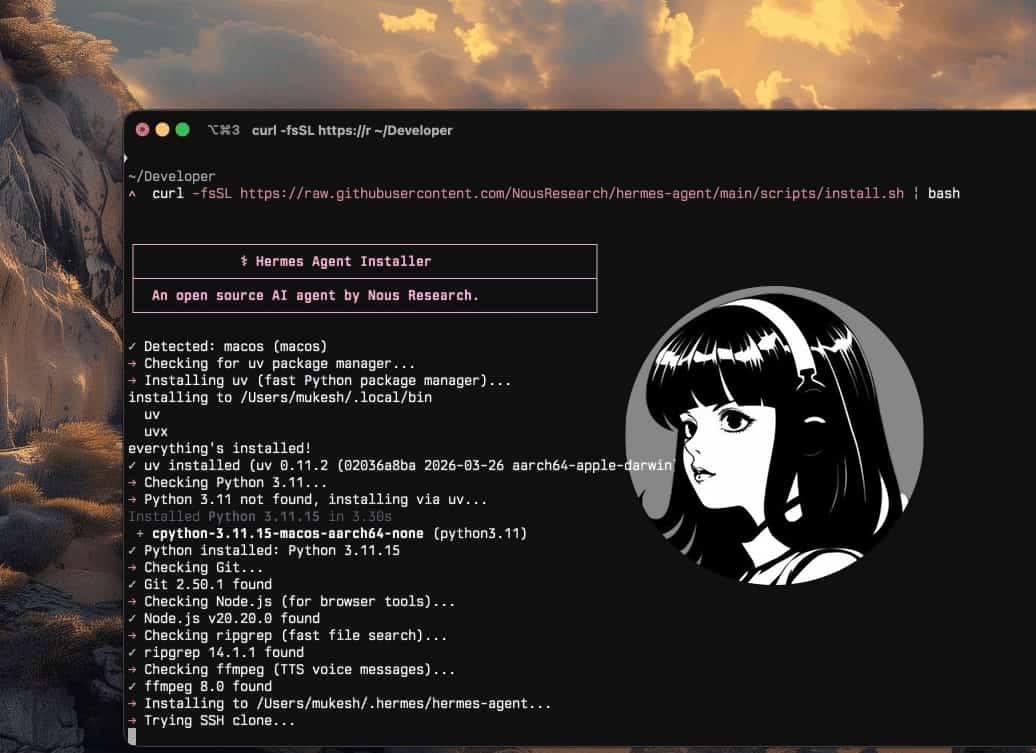
Hermes Agent is a better fit for a server-oriented setup with deep deployment and model control. It suits technical teams that want to decide how the environment behaves from the bottom up. Compared with a managed workspace, it asks for more operational comfort and offers fewer guardrails for a simple daily assistant experience.
3. Claude Cowork and Lindy: Best for Polished, Narrower Assistance
Claude Cowork for Focused Knowledge Work

Claude Cowork is attractive when the work is mostly reasoning, writing, files, and careful document analysis. Its polished interface and strong model experience can make it feel immediately useful. It is less compelling when the assistant must run recurring jobs, operate across a customized stack, or become a persistent workspace that evolves with several projects.
Lindy for Ready-Made Business Admin
Lindy is geared toward the familiar tasks that make up an overloaded week: email, calendars, follow-ups, meetings, and routine business administration. It is a sensible choice when the available templates already match your process. For a closer look at that category and its limits, see the recent Lindy AI alternative guide.
The tradeoff is flexibility. Ready-made assistants are faster to try, but become less comfortable when work cuts across research, browser tasks, custom skills, internal tools, and long-running projects.
4. n8n: Best for Workflows You Want to See and Control
n8n is not really a personal assistant replacement. It is a workflow builder. That is exactly why it is excellent for a predictable sequence: a form arrives, data is cleaned, a record is updated, an alert is sent, and a result is logged. Every step can be inspected and changed.
An agent becomes more useful when the work cannot be reduced to a stable flowchart. Researching a market, deciding which messages need attention, navigating a site, or drafting a useful report requires context and judgment. The two approaches can work together: use n8n for deterministic handoffs and an agent for the ambiguous work around them.
For example, a Gmail skill can help an agent sort, summarize, and draft around a conversation, while n8n can route the approved outcome into a CRM or ticketing system. That division keeps the workflow visible without forcing every decision into a brittle diagram.
5. Model Choice and Real Use Cases Matter More Than a Long Feature List
An assistant is only as useful as the model and tools assigned to the job. Coding, complex research, large documents, and fast low-cost background checks do not need the same model profile. A workspace that can change models is easier to tune as the work grows; Claude Sonnet 5 is one useful reference point for tasks that demand strong reasoning and tool use.
The practical test is whether the assistant can own a repeatable outcome. A good first project might be a competitor-monitoring workflow: track a small set of sites, summarize meaningful changes, and send the update on a schedule. It reveals quickly whether the agent has the right access, instructions, model, and review process.
Vellum Alternatives for Windows, Mac, and Linux
Vellum's native desktop experience is centered on macOS. That is a strength if the assistant must work directly inside Mac apps, but it is not the only way to run an assistant. On Windows or Linux, a hosted workspace avoids making a local machine responsible for the runtime. You can open the browser, message the agent through your chosen channel, and let scheduled work continue after you step away.
Self-hosted OpenClaw and Hermes Agent hosting remain good options for those who want local control on a supported system. The decision is not really about the logo on the machine. It is about whether you want to operate the runtime yourself, whether the agent needs direct desktop control, and whether the work should survive device changes, sleep, and restarts.
Is Vellum Worth It?
Vellum is worth considering when its strengths match the work: a Mac-first setup, native desktop interaction, managed memory, and a carefully designed permission model. It offers a coherent personal-assistant experience rather than a pile of separate tools.
MyClaw is a better fit when the core requirement is managed continuity: an OpenClaw agent that can keep running, use different models, work through browser and messaging channels, and become a repeatable workspace for an individual or team. OpenClaw or Hermes Agent fit when full ownership of the environment matters more than avoiding maintenance. n8n fits when predictability matters more than agent judgment.
Before connecting real accounts, check the details that affect trust: where data lives, how credentials are accessed, what must be approved, how backups work, and what happens when a task fails. Those answers matter more than a generic feature score.
Final Recommendation
The best Vellum AI alternative depends on the kind of responsibility you want to hand over. A local personal assistant, a self-hosted framework, a workflow builder, and a managed agent workspace can all look similar in a short product demo, but they behave very differently over a month of real work.
MyClaw is the best starting point when you want an always-on OpenClaw assistant without inheriting the server, update, and uptime work that comes with self-hosting. Begin with one recurring task, measure whether the result saves time, and build from there.
Skip the Setup, Run Best-in-Class AI Agents Now
Launch a managed OpenClaw or Hermes Agent workspace in minutes, with always-on hosting, updates, and support handled by MyClaw.